Thailand is undergoing a rapid transformation in its infrastructure and energy landscape. Driven by the "Thailand 4.0" initiative and the development of "Smart Cities," there is a significant shift towards sustainable and efficient public lighting. Solar street light solutions have emerged as a cornerstone of this transition, offering a resilient and cost-effective alternative to traditional grid-tied systems. This guide provides an in-depth, expert-level analysis of solar street lighting tailored to Thailand's unique climate—characterized by high solar irradiance and intense monsoon seasons. We explore the technical specifications of high-efficiency monocrystalline panels, advanced LiFePO4 battery storage, and intelligent MPPT controllers. Furthermore, we highlight why RCTraffic is the preferred partner for large-scale projects, delivering superior durability and smart management capabilities that align with Thailand's national development goals.
For Thai municipalities and government agencies like the Department of Rural Roads (DRR), the high cost of electricity and the ongoing maintenance of aging grid infrastructure are significant burdens. In remote rural areas, extending the power grid to provide reliable lighting is often prohibitively expensive. Meanwhile, industrial estates managed by the Industrial Estate Authority of Thailand (IEAT) are under increasing pressure to meet sustainability requirements and reduce their carbon footprint as part of the "Green Industry" movement.
The adoption of solar lighting is strategically vital across Thailand's major economic hubs:
Modern solar street lights are integrated systems designed for maximum energy harvest and long-term reliability.
In Thailand's tropical climate, maximizing efficiency is key. Monocrystalline panels, with conversion rates exceeding 21%, are preferred over polycrystalline alternatives. They perform better in the high-heat conditions of the Thai summer and are more effective at capturing energy during the overcast days of the monsoon season.
Utilizing high-lumen LED chips (e.g., Philips or Epistar) ensures superior brightness with minimal power consumption. For Thai highways and industrial parks, professional-grade optics are used to provide uniform light distribution, meeting the strict safety standards required for high-speed traffic and large-scale facilities.
The choice of battery technology is critical for Thailand's high-temperature environment. Lithium Iron Phosphate (LiFePO4) batteries are the industry standard for several reasons:
The Maximum Power Point Tracking (MPPT) controller acts as the brain of the system. RCTraffic’s patented PRO-DOUBLE MPPT controllers optimize energy harvest by up to 30% compared to standard controllers, ensuring that the lights remain operational even after several consecutive days of rain.
| Feature | All-in-One (Integrated) | Split-Type |
|---|---|---|
| Components | Panel, Battery, LED in one housing | Separate components |
| Installation | Fast and simple; low labor cost | Requires more wiring and assembly |
| Flexibility | Fixed panel orientation | Panel can be tilted independently for optimal sun |
| Best For | Residential streets, parks, mall parking lots | National highways, EEC industrial zones, rural roads |
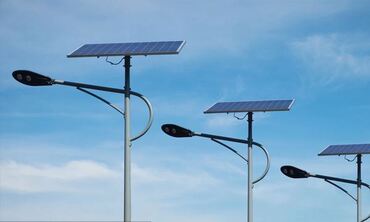
Solar lighting is essential for the Department of Rural Roads (DRR) to provide safety on unlit stretches of highway and remote bridges. Split-type systems are often preferred here, as they allow for larger solar panels and batteries to ensure high lux levels throughout the night.
In major industrial hubs like Amata City or WHA Industrial Estates, solar lighting provides reliable security and perimeter illumination. Logistics parks and shopping mall parking lots in Bangkok and Chonburi benefit from the zero-electricity cost and low maintenance requirements of integrated solar solutions.
For tourism hotspots like Phuket and Pattaya, aesthetics and durability are paramount. Solar street lights with salt-air resistance and high IP ratings are used to illuminate beachfront roads. Eco-resorts use solar to minimize their environmental impact while providing a premium, sustainable experience for guests.
To maximize energy harvest, solar panels must be tilted according to Thailand's latitude.
A slight tilt is also necessary to allow rainwater to wash away dust, which can accumulate during the dry season.
Thailand's climate is a rigorous test for outdoor electronics.
In line with Thailand's "Smart City" goals, solar lights are increasingly equipped with IoT sensors. This allows for remote monitoring, real-time fault detection, and adaptive dimming, where the light intensity is reduced when no motion is detected, significantly extending battery life during the rainy season.
RCTraffic’s products are engineered specifically for the challenges of the Southeast Asian market.
Our solutions feature heat-resistant battery enclosures and corrosion-resistant ADC12 aluminum housings. We use specialized coatings that pass rigorous salt-spray tests, making our lights ideal for Thailand's coastal and industrial environments.
RCTraffic’s IoT-enabled systems provide Thai project managers with a centralized dashboard to monitor performance across multiple sites. This proactive approach reduces maintenance costs and ensures that the infrastructure remains operational 365 days a year.
For Thai developers and government units, the Return on Investment (ROI) is typically achieved within 2-3 years. By eliminating electricity bills and significantly reducing the need for cable maintenance and trenching, our solutions offer substantial long-term savings. Furthermore, they contribute to carbon footprint reduction, supporting Thailand's commitment to the Paris Agreement.
With over 12 years of experience and a strong presence in more than 60 countries, RCTraffic brings world-class manufacturing expertise to Thailand. We have a proven track record of successful deployments across Southeast Asia, ensuring that our products are "tropicalized" for the local climate.
We understand the rigorous safety and industrial standards required by the IEAT and DRR. Every RCTraffic unit undergoes a 72-hour aging test and strict quality control to ensure it meets international certifications for performance and durability.
Thailand's ambitious "Thailand 4.0" economic model is designed to transform the country into a value-based economy through innovation and technology. A key component of this model is the development of Smart Cities, where digital technology is integrated into urban infrastructure to improve the quality of life, enhance safety, and promote sustainability.
Street lighting is often the first step in a city's smart transformation. By replacing traditional lights with IoT-enabled solar street lights, municipalities can create a "connected" network. These lights do more than just provide illumination; they serve as a platform for various smart city applications:
The EEC is Thailand's flagship economic zone, attracting billions in foreign investment across Chonburi, Rayong, and Chachoengsao. For the industrial estates and logistics hubs in this region, solar street lighting is not just an energy-saving measure; it is a requirement for modern, sustainable industrial development.
To ensure that solar street lights can withstand Thailand's unique environmental stresses, specific technical considerations must be addressed.
Thailand's average high temperatures often exceed 35°C, and surface temperatures on metal fixtures can be even higher. This heat can reduce the efficiency of LED chips and shorten the life of electronic components.
With over 3,000 km of coastline and numerous industrial zones, salt-air and chemical corrosion are major concerns in Thailand.
The monsoon season in Thailand can bring weeks of overcast skies and heavy rain. A standard solar light might fail after just two days of no sun.
For government agencies and private developers, the decision to switch to solar is driven by both sustainability and economics.
A typical grid-tied LED street light in Thailand consumes approximately 250 kWh per year. With current electricity rates, this costs about 1,200 THB per year. For a municipality with 1,000 street lights, the annual electricity bill exceeds 1.2 million THB. Solar street lights eliminate this recurring cost entirely.
Installing grid-tied lights requires extensive trenching, cabling, and the installation of transformers. In many Thai rural roads or new industrial estates, these infrastructure costs can be astronomical.
As Thailand moves towards its goal of carbon neutrality by 2050, businesses are increasingly required to report their carbon emissions.
A major industrial estate in the EEC replaced its traditional perimeter lighting with 500 RCTraffic IoT-enabled solar street lights. The project resulted in: - 100% reduction in lighting-related electricity costs. - Real-time monitoring of all lights, reducing the time to repair from days to hours. - Enhanced security through the integration of motion sensors that increase brightness when activity is detected.
The Department of Rural Roads installed solar street lights on a series of remote bridges and unlit road stretches in Chiang Mai. The project has: - Significantly improved road safety, leading to a measurable decrease in nighttime accidents. - Provided reliable lighting to communities that previously had no public illumination. - Avoided the high cost of extending the power grid to these remote locations.
A luxury resort in Phuket installed solar street lights along its beachfront access road. The lights were chosen for their: - Aesthetic appeal, blending seamlessly with the resort's high-end design. - Salt-air resistance, ensuring they remain in pristine condition despite the marine environment. - Sustainability, aligning with the resort's "Eco-Friendly" branding.
The adoption of solar street lighting is a vital step toward a safer, more sustainable, and technologically advanced Thailand. By aligning with national goals like "Thailand 4.0" and "Smart Cities," solar solutions offer a path to energy independence and significant cost savings for both the public and private sectors. With high-performance components and intelligent management, solar is the future of Thai infrastructure.
Explore RCTraffic’s advanced solar street light solutions here: https://www.rctraffic.com.
Whether you are managing an industrial estate in the EEC or a municipal project in Bangkok, RCTraffic has the expertise to illuminate your path. Contact us today for a project consultation and bulk inquiry pricing tailored for the Thai market.
Q1: How do the lights perform during the long monsoon season in Thailand? A1: RCTraffic solar lights are designed with high-efficiency panels and advanced MPPT controllers that can harvest energy even under overcast skies. Combined with smart dimming and high-capacity LiFePO4 batteries, our systems provide 5-7 days of autonomy, ensuring they stay lit throughout the rainy season.
Q2: How do you manage the extreme heat in Thailand to prevent battery failure? A2: We use high-quality LiFePO4 batteries, which have a much higher thermal stability than traditional lithium-ion or lead-acid batteries. Additionally, our fixtures are designed with aluminum housings that act as heat sinks, and battery compartments are engineered to minimize heat buildup.
Q3: Are RCTraffic solar street lights suitable for coastal areas like Phuket or Rayong? A3: Yes. Our lights are built with ADC12 die-cast aluminum and treated with anti-corrosion coatings. With an IP67 rating, they are fully protected against salt-air corrosion and humidity, making them ideal for beachfront roads and island resorts.
Q4: What kind of maintenance is required for solar street lights in an industrial estate? A4: Maintenance is minimal. We recommend a visual inspection once a year and cleaning the solar panels if there is significant dust accumulation (especially during the dry season). Our IoT systems will automatically alert you if any component requires attention.
Q5: Can these lights be integrated into an existing Smart City dashboard? A5: Absolutely. RCTraffic’s IoT modules use standard protocols that can be integrated with most Smart City management platforms, allowing for centralized control of lighting, energy monitoring, and maintenance scheduling.
Q6: Do these lights meet the standards of the Department of Rural Roads (DRR)? A6: Yes, our technical specifications for lumen output, pole strength, and component durability are designed to meet or exceed the requirements for national and rural road lighting in Thailand. We provide all necessary test reports and certifications for government procurement.