
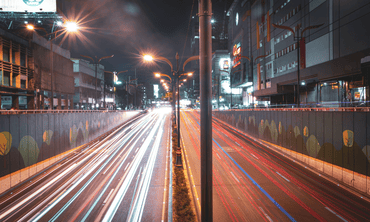
The shift from passive reflectors to solar studs reflects a broader infrastructure upgrade. Solar studs supplement street lighting and reflective paint, creating a smart road system. They are installed flush in the pavement using epoxy, and their bright LEDs improve lane visibility on dark or foggy nights. According to DPWH, these markers must use aluminum die-cast bodies with stainless steel safety locks, and internal modules must be sealed to IP68 standards. In practice, engineers find that using such robust, certified devices is key to long-term road safety in the Philippines’ challenging environment.
Many regions of the Philippines experience year-round high humidity and frequent typhoons. In this tropical climate, road studs must be fully waterproof. Unlike IP67 devices (protected against splashes), DPWH now requires IP68 rating for solar pavement markers, meaning they can withstand prolonged water immersion. This distinction is critical: IP68 studs survive days of torrential rains and floods, whereas IP67 units often leak and fail. For example, after a typhoon, budget plastic studs have been found filled with water and rendered inoperative. By contrast, high-quality studs (such as the RC-SRS-C3) use internal glue-filling or potting techniques to seal electronics, ensuring no water ingress even under heavy rain.
Furthermore, DPWH standards call for studs that withstand 150 km/h winds and temperatures from –20°C to +60°C, reflecting local extremes of typhoon winds and sun. In provinces like Leyte or Northern Luzon, a single monster typhoon can bring both driving rain and standing water; only IP68-rated, welded-seam studs survive such tests. In short, any solar stud deployed nationwide must meet IP68 waterproofing to endure the Philippines’ monsoon and typhoon seasons.
Coastal areas add another hazard: salt-laden sea air. Marine salt spray aggressively corrodes metals and electronics. For example, untreated steel can rust through in months. To combat this, top-tier road studs use die-cast aluminum alloy bodies with anti-corrosive coatings. The DPWH specification explicitly requires the housing and top ring to be cast aluminum. Aluminum resists corrosion far better than ordinary steel, and with specialized coatings (e.g. marine-grade powder coat), it withstands coastal environments. Industry sources note that in places like Cebu or Palawan, one should select road studs with “anti-salt fog coating” to protect against the corrosive sea breeze. In practice, specifying a PNS- or DOE-certified (Philippine standards) stud with such protection has prevented rapid failure seen with cheap models near the coast. High-end models like the RC-SRS-C3 take this further: their aluminum body and seals are rated for continuous outdoor salt-air exposure, virtually eliminating corrosion concerns.
Another unique challenge is extreme pavement heat. In the dry season, asphalt surface temperatures can exceed 45°C or more under direct sun. Such heat can damage low-quality batteries. Research shows that above 45°C, lithium batteries undergo rapid chemical reactions, producing internal gas and causing the cell to swell. On paved Philippine roads, we have seen inferior studs whose rechargeable batteries bulged after just one summer, eventually causing circuit failure. The DPWH standard acknowledges this by requiring batteries and cells rated for –20°C to +65°C. High-grade studs typically use LiFePO₄ cells or include thermal management to tolerate heat. For example, studies warn that keeping solar modules below extreme temperatures is key to longevity. In short, any budget stud that omits proper thermal design risks battery failure in Philippine heat. Choosing a proven solar stud with high-temperature-tolerant cells (as in RC-SRS-C3) is a must to avoid the “puffed battery” problem.
At first glance, low-priced plastic solar studs may seem cost-effective. However, field experience in the Philippines shows they often fail prematurely, turning initial savings into higher costs. Common failure modes include water ingress (due to poor sealing), mechanical collapse under heavy vehicles, and UV degradation. For instance, inspection reports frequently note cheap studs that have leaked and shorted out after heavy rain. Regular jeepneys and trucks, often 10–15 tons per axle, can crack or displace lighter-duty studs over time. One study on plastic vs aluminum road markers explicitly found that plastic studs degrade and break in sunlight, causing frequent replacements. In practice, roads paved with cheap studs have seen faded lenses and corroded parts after a few rainy seasons.
These failures inflate maintenance budgets. Each replacement entails labor and parts. According to one industry cost analysis, replacing a short-lived road stud (with labor) can cost $50–$100 apiece. Multiply that by hundreds of units and repeated 2-3 year replacements, and the total cost of ownership skyrockets. In contrast, a durable aluminuim stud with a 5–8 year life means far fewer replacements.
| Failure Mode | Cheap Plastic Studs | High-End Aluminium Studs |
|---|---|---|
| Water Ingress | Often just IP67, prone to leaks | Fully IP68 sealed (glue-filled), no leaks |
| Load Strength | ABS/PC housing, typically 20–30 tons | Die-cast aluminum housing, >80 tons static |
| UV Exposure | Plastic lens yellows, quick degradation | UV-resistant PC lens, rated for decades |
| Maintenance | Frequent replacement (life ~3–4 years) | Long life (5–8 years), components serviceable |
| Replacement Cost | ~$50–100 per stud, recurring | Higher upfront, but rarely needed |
In summary, the unit price vs. life-cycle cost comparison heavily favors quality. A cheap stud at $20 might fail in 1–2 years, whereas a $60 stud lasting 5+ years is more economical overall. This “budget trap” has been noted by Filipino contractors who learned the hard way that replacement costs dominate maintenance budgets.
The RC-SRS-C3 solar road stud exemplifies how good design tackles these challenges. Load-bearing capacity is critical on Philippine highways. The C3 is rated for over 80 tons static load, meaning even a fully-loaded 10-ton truck exerts little strain. By contrast, DPWH’s minimum compression test is only 30 tons. This extra strength allows RC-SRS-C3 to be placed anywhere – even center lanes with heavy traffic – without damage.
Its monocrystalline solar panel (2.5V, 0.3W) ensures efficient charging. Monocrystalline cells are known for higher efficiency and temperature tolerance. This means the RC stud charges well even on cloudy days and maintains consistent brightness. Alongside top-grade LEDs (100,000+ hour life as marketed by the manufacturer), the light output remains vivid over time. For example, the company’s datasheet notes American-brand LEDs and a 22% efficiency solar module, underscoring component quality.
Waterproofing in the C3 is achieved through multiple measures. As DPWH mandates, the electronics module is “tightly sealed” inside its case. Manufacturers describe using “bottom glue filling” to completely seal even plastic studs for IP68. In RC-SRS-C3, all seams are epoxy-sealed or gasketed. Even if a cheap model drips, the C3 remains dry. This permanent sealing is one reason users rarely report mid-life failures.
| Specification | RC-SRS-C3 (Aluminium Solar Stud) | Typical Plastic Solar Stud |
|---|---|---|
| Housing Material | Die-cast aluminum (6061 alloy) | High-strength ABS or PC plastic |
| Solar Panel | Monocrystalline 2.5V, 0.3W | Mono/polycrystalline (~2.5V, ~100mA) |
| Battery | Li-ion 3.2V, 1000 mAh | Ni-MH or generic Li-ion (~600 mAh) |
| Load Capacity (static) | >80 tons | ~20–30 tons |
| Waterproof Rating | IP68 dust/waterproof | Often IP67 |
| Battery Life | 5+ years (field tested) | ~3–5 years (degrades faster) |
| LED Lifetime | >50,000 hours (Philips LEDs) | ~20,000 hours (standard LEDs) |
| Temperature Range | -20°C to +65°C | -20°C to +70°C |
| Warranty | 12–18 months (manufacturer) | Typically 1 year |
Collectively, these engineering decisions give RC-SRS-C3 a clear durability edge. Its single-crystal panel charges reliably, the battery and LED survive extreme temperature swings, and its construction meets or exceeds all DPWH requirements.
Proper maintenance practices differ significantly between old-style cat’s eyes (reflectors) and modern solar studs:
Traditional (passive) studs: Generally made of glass/plastic with reflective backs. They have no electronics. Lifespan is typically 4–6 years before lens or housing degrades. Maintenance is minimal: periodic cleaning of dirt/brakespray and roadside inspections. Replacement occurs when reflectivity dims or panels break.
Solar studs: Require some active upkeep. The solar panel surfaces should be cleaned regularly (every few months) to ensure charging. The electronics should be inspected annually—checking that lights flash correctly and no moisture intrusion is present. The battery may need replacement every 3–5 years (short-life Li-ion types) or 5–8 years (LiFePO₄). Overall, solar studs have higher upfront maintenance (battery replacement) but much longer useful life if properly cared for.
| Maintenance Aspect | Traditional Reflectors | Solar Road Studs |
|---|---|---|
| Lifespan | ~4–6 years under traffic and UV | Li-ion solar: ~3–5 years; LiFePO₄: ~5–8 years |
| Cleaning | Occasional dirt removal | Regular panel cleaning (to max. sunlight) |
| Inspection | Every few years (panel integrity) | Every 6–12 months (seals, LEDs, battery) |
| Battery Replacement | N/A | Yes, based on chemistry (3–8 yrs) |
| Typical Maintenance | Replace broken reflectors | Check electronics, reseal if needed |
| Cost Implication | Moderate (cheap parts) | Low-frequency (battery kits cost) |
Even accounting for maintenance, solar studs deliver more consistent lighting performance over time. The key is to budget for occasional service (battery or seal checks) as part of road upkeep schedules. Over a 5-year span, properly maintained solar studs will far outperform passive ones in uptime and visibility.
When preparing bids or purchasing, it’s important to verify that solar studs meet all technical requirements:
| Road Type | Typical Traffic Load | Recommended Stud Static Capacity |
|---|---|---|
| Urban Streets | Passenger cars, light trucks (<15T) | 20–30 tons (standard studs) |
| Provincial Roads | Mixed traffic, minibuses (15–30T) | 30–50 tons |
| National Highways | Heavy trucks, buses (30–50T/axle) | 50–80 tons |
| Expressways/Ports | Fully-loaded heavy trucks (>50T/axle) | ≥80 tons (e.g. RC-SRS-C3) |
Use the above as guidance: if heavy logistics routes are involved, opt for >80T-rated studs like RC-SRS-C3. For lighter city streets, 20–30T studs may suffice.
Finally, proper installation is crucial. Before placing studs, prepare the pavement: coring holes to exact size, cleaning out debris, and ensuring the surface is completely dry. Apply the two-part epoxy generously on both the hole and the stud base. Gently press the stud in place and hold it level. The epoxy should squeeze out around the edges; wipe off excess. Align the stud so its primary LED faces along the traffic flow. It’s best practice to block off the lane for at least 2 hours (or as directed by the manufacturer) to let the epoxy cure undisturbed.
Once installed, solar studs require minimal upkeep beyond cleaning and periodic checks. When properly chosen and installed, they provide years of reliable performance. The RC-SRS-C3 and similar high-spec models are designed to withstand the Philippines’ tropical climate and heavy traffic. In contrast, cheap plastic studs often let moisture or heat ruin the unit within a season. By investing in quality (meet or exceed DPWH specs) and adhering to installation best practices, road agencies can ensure their solar studs become true safety assets rather than maintenance headaches. In conclusion, the right solar road stud solution – combined with proper procurement, installation, and maintenance – can significantly enhance nighttime driving safety on Philippine roads, turning challenges of typhoons and corrosion into manageable engineering requirements.
.jpg)
.png)
.jpg)
.jpg)