
The Republic of the Philippines, an archipelagic nation of over 7,000 islands, stands at a critical juncture in its infrastructure development. As urbanization accelerates in regions like Metro Manila, Cebu, and Davao, the demand for reliable, cost-effective, and resilient public lighting has never been higher. Traditional grid-tied lighting systems, while once the standard, are increasingly proving inadequate in the face of the Philippines' unique geographical and climatic challenges. High electricity costs—among the highest in Southeast Asia—coupled with frequent grid instability and the perennial threat of devastating typhoons, have necessitated a paradigm shift.
Enter solar street light solutions. No longer just a "green" alternative, solar lighting has evolved into a strategic infrastructure asset. This comprehensive guide delve deep into the technical, economic, and practical aspects of deploying solar street lighting in the Philippines. We explore advanced technologies such as high-efficiency monocrystalline panels, LiFePO4 battery storage, and intelligent MPPT controllers. Furthermore, we provide expert insights into engineering best practices for typhoon resilience and salt-spray protection in coastal zones.
As a global leader in traffic and solar lighting technology, RCTraffic is proud to support the Philippines' transition to sustainable illumination. This article serves as an authoritative resource for Local Government Units (LGUs), infrastructure authorities, real estate developers, and project buyers seeking to implement world-class lighting solutions that enhance safety, reduce operational costs, and withstand the rigors of the Philippine environment.
The Philippines consistently ranks as one of the most expensive countries for electricity in Asia. This financial burden falls heavily on LGUs, where street lighting can account for a significant portion of the annual budget. Moreover, the archipelagic nature of the country means that many rural and island communities remain "off-grid" or suffer from frequent "brownouts" and voltage fluctuations. Traditional high-pressure sodium (HPS) or even early-generation LED grid lights are vulnerable to these instabilities, leading to high failure rates and maintenance costs.
The Philippines is situated in the Pacific "Typhoon Belt," experiencing an average of 20 typhoons per year. Recent years have seen an increase in the intensity of these storms, with "Super Typhoons" reaching Signal No. 4 and No. 5. For public lighting infrastructure, this means enduring sustained winds of over 200 km/h and torrential rains. Conventional poles and fixtures often fail under these conditions, leading to darkened streets during the very times when safety and visibility are most critical.
In urban centers like Metro Manila, solar street lights reduce the strain on the aging power grid and provide "always-on" security lighting. In remote municipalities—from the highlands of Cordillera to the islands of Tawi-Tawi—solar lighting is often the only viable way to provide modern illumination without the astronomical cost of extending power lines. The strategic importance of solar lies in its decentralized nature; each pole is an independent power plant, immune to grid-wide failures.
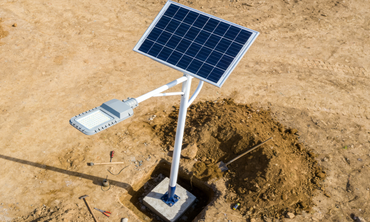
To achieve the reliability required for Philippine infrastructure, one must look beyond the surface. A high-performance solar street light is a symphony of four critical components.
While polycrystalline panels are common, infrastructure-grade projects in the Philippines should prioritize Mono-crystalline silicon. These panels offer conversion efficiencies exceeding 21%, which is vital for the Philippines' tropical climate where cloud cover during the monsoon season can limit sunlight. Mono panels perform better in low-light conditions and have a smaller physical footprint for the same power output, reducing the wind-catch area—a crucial factor in typhoon resistance.
The battery is the heart of the system. Traditional Lead-Acid or Gel batteries are ill-suited for the Philippine heat; they degrade rapidly and require frequent replacement. Lithium Iron Phosphate (LiFePO4) is the gold standard for several reasons:
The controller manages the flow of energy. RCTraffic utilizes a patented PRO-DOUBLE MPPT (Maximum Power Point Tracking) controller. Unlike standard PWM controllers, MPPT technology can harvest up to 30% more energy from the panels by constantly adjusting the electrical operating point. Our PRO-DOUBLE series goes further, utilizing dual-channel optimization to ensure 365-day continuous lighting, even during the "Habagat" (Southwest Monsoon) season.
Modern LEDs, such as those from Philips or Epistar, now achieve luminous efficacies of over 200 lm/W. However, the brightness is only half the story. Professional-grade lights use Type II or Type III optical lenses to distribute light along the roadway rather than wasting it in the sky or behind the pole. This ensures uniform illumination (lux levels) that meets international road safety standards.
| Feature | All-in-One (Integrated) | Split-Type |
|---|---|---|
| Components | Panel, Battery, LED in one housing | Panel separate from LED/Battery |
| Installation | Extremely fast (15-20 mins) | Requires more labor/wiring |
| Panel Size | Limited by the fixture size | Virtually unlimited; can be very large |
| Maintenance | Modular; easy to swap entire unit | Components can be serviced individually |
| Best For | Residential streets, parks, pathways | National highways, high-wattage needs |
The Philippines' 36,000 km of coastline poses a unique threat: Salt Spray Corrosion. Standard metal fixtures will rust within months. RCTraffic’s coastal-grade solutions utilize ADC12 Die-cast Aluminum with specialized anti-corrosion coatings and IP67-rated seals to ensure longevity in island resorts from Palawan to Siargao.
In the Philippines, the sun is almost directly overhead, but its path shifts north and south throughout the year. For optimal year-round performance:
A solar street light is essentially a sail on a stick. During a typhoon, the wind pressure is immense.
To survive the 100+ days of rain the Philippines receives annually, "Smart" is better than "Always Bright."
Why do engineers and procurement officers specify RCTraffic for Philippine projects? It comes down to our relentless focus on durability and intelligence.
Our "Project-Grade" series features IP66 or IP67 waterproof ratings. We don't just test for rain; we test for high-pressure water jets and temporary submersion. Our housings are made from high-grade aluminum that dissipates heat effectively, preventing the internal electronics from cooking in the 35°C Philippine heat.
Imagine managing 500 street lights across a city from a single dashboard. RCTraffic’s IoT (Internet of Things) modules allow LGUs - Monitor battery health and solar charging in real-time. - Identify failed lights instantly without waiting for citizen complaints. - Adjust dimming schedules remotely to save energy or increase brightness during local festivals (Fiestas).
While the upfront cost of solar is higher than grid-tied lights, the Return on Investment (ROI) is typically achieved within 24 to 36 months.
RCTraffic isn't just a manufacturer; we are an export powerhouse with over 12 years of experience. We have successfully deployed thousands of units in similar tropical climates like Malaysia, Indonesia, and Vietnam. We understand that a light that works in Europe will fail in the tropics; our designs are "Tropicalized" from the ground up.
Every unit undergoes a 72-hour aging test and a rigorous waterproof check before it leaves our factory. We provide comprehensive technical documentation to assist Filipino engineers in their project submittals and offer localized support to ensure that every project—from a small Barangay path to a major national highway—is a success.
The Philippines is a nation of resilience, and its infrastructure should reflect that. The transition to solar street lighting is a proven path to enhancing public safety, achieving sustainability goals, and protecting municipal budgets from rising energy costs. By choosing high-specification components like LiFePO4 batteries and MPPT controllers, and adhering to strict typhoon-resistant engineering, the Philippines can light its way to a brighter future.
Explore RCTraffic’s advanced solar street light solutions here: https://www.rctraffic.com.
Whether you are an LGU official planning a city-wide upgrade or a developer starting a new subdivision, RCTraffic has the expertise and the technology to bring your vision to light. Contact us today for a free project consultation and bulk pricing inquiries. Let’s build a more resilient Philippines together.
Q1: Will the lights stay on during a week-long typhoon with no sun? A1: Yes. RCTraffic solar street lights are engineered with "Autonomy," typically 5 to 7 days. By using high-efficiency panels and smart dimming, the system conserves enough energy in the LiFePO4 battery to provide light even during extended periods of heavy cloud cover and rain.
Q2: How do we protect the lights from theft, especially the batteries? A2: For our All-in-One systems, the battery is integrated inside the aluminum housing, high up on the pole, making it extremely difficult to access without specialized equipment. For Split-type systems, we offer anti-theft battery boxes that can be buried in concrete or mounted high on the pole with tamper-proof bolts.
Q3: Is maintenance difficult for local Barangay technicians? A3: Not at all. Our All-in-One systems are "Plug-and-Play." If a component needs service, the modular design allows for a quick swap of the LED module or the battery pack using basic tools. We provide simple, illustrated manuals in English to assist local teams.
Q4: Can these lights withstand the salt air in coastal towns like Boracay or El Nido? A4: Absolutely. We use ADC12 aluminum with a high-grade powder coating that passes 500-hour salt spray tests. Our IP67 rating ensures that salt-laden moisture cannot enter the electronic compartments, preventing internal corrosion.
Q5: What is the warranty, and how do we get parts in the Philippines? A5: We offer a standard 3-to-5-year warranty on our project-grade lights. We maintain a robust supply chain and can ship replacement parts or additional units quickly to any major port in the Philippines, from Manila to Davao.
Q6: Are solar street lights compliant with DPWH (Department of Public Works and Highways) standards? A6: Yes, our technical specifications meet or exceed the typical requirements set by the DPWH for illumination levels, pole strength, and component quality. We provide all necessary test reports and certifications to assist in the COA (Commission on Audit) and DPWH approval processes.
At RCTraffic, we believe that a solar street light is only as good as its weakest link. In the Philippines, that weak link is often the environmental stress. Our engineering philosophy is built on three pillars: Thermal Management, Structural Integrity, and Intelligent Autonomy.
The Philippines experiences high ambient temperatures year-round, often peaking above 35°C. For many solar lights, this heat is a silent killer. High temperatures accelerate the degradation of lithium batteries and reduce the efficiency of LED chips. RCTraffic’s "Project-Grade" housings are designed with integrated heat sinks made from high-conductivity aluminum alloys. By maintaining a lower internal operating temperature, we extend the lifespan of the LiFePO4 battery by up to 40% compared to cheaper plastic or thin-metal alternatives.
While many focus on the pole, the mounting bracket and the fixture's "wind-catch" area are equally critical. Our fixtures are designed with an aerodynamic profile to minimize wind resistance. The mounting brackets are reinforced with high-tensile bolts that pass 500-hour vibration tests, ensuring that the light doesn't "rattle" or come loose during the sustained vibrations of a typhoon.
Our patented PRO-DOUBLE MPPT controller is more than just a charger. It’s an energy management system that learns from the environment. During the "Amihan" (Northeast Monsoon) season, when skies are clearer, the controller focuses on rapid charging and maintaining 100% brightness. During the "Habagat" season, it automatically switches to an Energy-Saving Mode, utilizing its dual-channel logic to balance the load between the LED module and the battery, ensuring that the light never goes out, even if there hasn't been direct sun for a week.
With over 12 years in the industry, RCTraffic has moved beyond the "assembly" stage to full-scale integrated manufacturing. We control every step of the process, from the die-casting of the aluminum housings to the SMT (Surface Mount Technology) assembly of the LED boards and controllers. This vertical integration allows us to maintain a level of quality control that "trading companies" simply cannot match.
We understand that every LGU and every developer has different needs. Whether you require a specific color temperature (e.g., 3000K for a heritage park in Vigan or 6000K for a high-speed highway in Davao), or a custom pole height and bracket design, RCTraffic’s R&D team can provide tailored solutions. We offer OEM and ODM services, allowing project owners to specify the exact components and features they need to meet their unique project goals.
Large-scale infrastructure projects in the Philippines require extensive documentation for bidding and auditing. RCTraffic provides: * LM-79 and LM-80 Reports for LED performance and lifespan. * IP and IK Certification from independent third-party labs. * Detailed Wind Load Calculations for pole and fixture stability. * Dialux Lighting Simulations to show exactly how many lux will be on the road surface.
Our success in Malaysia, Indonesia, and Vietnam has given us a deep understanding of the ASEAN (Association of Southeast Asian Nations) regulatory and environmental landscape. We are not just selling a product; we are bringing a proven regional solution to the Philippines. We are committed to long-term partnerships, offering training for local installers and ensuring that spare parts are always available for the life of the project.
While we cannot name specific clients due to confidentiality, our technology has transformed communities across the archipelago.
The Philippines is a nation on the move, and its infrastructure must be as resilient as its people. Solar street lighting is more than just a utility; it’s a symbol of progress, safety, and environmental stewardship. By choosing high-quality, typhoon-proof, and intelligently managed solutions from RCTraffic, the Philippines can ensure that its streets remain bright, its citizens remain safe, and its future remains sustainable.
Explore RCTraffic’s advanced solar street light solutions here: https://www.rctraffic.com.
Join the hundreds of LGUs and developers who have already made the switch. Contact us today for your project consultation. Let’s build a brighter, more resilient Philippines together.
The Republic of the Philippines, an archipelagic nation of over 7,000 islands, stands at a critical juncture in its infrastructure development. As urbanization accelerates in regions like Metro Manila, Cebu, and Davao, the demand for reliable, cost-effective, and resilient public lighting has never been higher. Traditional grid-tied lighting systems, while once the standard, are increasingly proving inadequate in the face of the Philippines' unique geographical and climatic challenges. High electricity costs—among the highest in Southeast Asia—coupled with frequent grid instability and the perennial threat of devastating typhoons, have necessitated a paradigm shift.
Enter solar street light solutions. No longer just a "green" alternative, solar lighting has evolved into a strategic infrastructure asset. This comprehensive guide delve deep into the technical, economic, and practical aspects of deploying solar street lighting in the Philippines. We explore advanced technologies such as high-efficiency monocrystalline panels, LiFePO4 battery storage, and intelligent MPPT controllers. Furthermore, we provide expert insights into engineering best practices for typhoon resilience and salt-spray protection in coastal zones.
As a global leader in traffic and solar lighting technology, RCTraffic is proud to support the Philippines' transition to sustainable illumination. This article serves as an authoritative resource for Local Government Units (LGUs), infrastructure authorities, real estate developers, and project buyers seeking to implement world-class lighting solutions that enhance safety, reduce operational costs, and withstand the rigors of the Philippine environment.
The Philippines consistently ranks as one of the most expensive countries for electricity in Asia. This financial burden falls heavily on LGUs, where street lighting can account for a significant portion of the annual budget. Moreover, the archipelagic nature of the country means that many rural and island communities remain "off-grid" or suffer from frequent "brownouts" and voltage fluctuations. Traditional high-pressure sodium (HPS) or even early-generation LED grid lights are vulnerable to these instabilities, leading to high failure rates and maintenance costs.
The Philippines is situated in the Pacific "Typhoon Belt," experiencing an average of 20 typhoons per year. Recent years have seen an increase in the intensity of these storms, with "Super Typhoons" reaching Signal No. 4 and No. 5. For public lighting infrastructure, this means enduring sustained winds of over 200 km/h and torrential rains. Conventional poles and fixtures often fail under these conditions, leading to darkened streets during the very times when safety and visibility are most critical.
In urban centers like Metro Manila, solar street lights reduce the strain on the aging power grid and provide "always-on" security lighting. In remote municipalities—from the highlands of Cordillera to the islands of Tawi-Tawi—solar lighting is often the only viable way to provide modern illumination without the astronomical cost of extending power lines. The strategic importance of solar lies in its decentralized nature; each pole is an independent power plant, immune to grid-wide failures.
To achieve the reliability required for Philippine infrastructure, one must look beyond the surface. A high-performance solar street light is a symphony of four critical components.
While polycrystalline panels are common, infrastructure-grade projects in the Philippines should prioritize Mono-crystalline silicon. These panels offer conversion efficiencies exceeding 21%, which is vital for the Philippines' tropical climate where cloud cover during the monsoon season can limit sunlight. Mono panels perform better in low-light conditions and have a smaller physical footprint for the same power output, reducing the wind-catch area—a crucial factor in typhoon resistance.
The battery is the heart of the system. Traditional Lead-Acid or Gel batteries are ill-suited for the Philippine heat; they degrade rapidly and require frequent replacement. Lithium Iron Phosphate (LiFePO4) is the gold standard for several reasons: * Cycle Life: LiFePO4 batteries offer over 2,000 to 3,000 cycles at 80% depth of discharge, lasting 5-8 years, compared to just 1-2 years for lead-acid. * Thermal Stability: They can operate safely at higher temperatures (up to 60°C) without the risk of thermal runaway. * Efficiency: They charge faster and discharge more efficiently, ensuring that even a few hours of sunlight can provide a full night of light.
The controller manages the flow of energy. RCTraffic utilizes a patented PRO-DOUBLE MPPT (Maximum Power Point Tracking) controller. Unlike standard PWM controllers, MPPT technology can harvest up to 30% more energy from the panels by constantly adjusting the electrical operating point. Our PRO-DOUBLE series goes further, utilizing dual-channel optimization to ensure 365-day continuous lighting, even during the "Habagat" (Southwest Monsoon) season.
Modern LEDs, such as those from Philips or Epistar, now achieve luminous efficacies of over 200 lm/W. However, the brightness is only half the story. Professional-grade lights use Type II or Type III optical lenses to distribute light along the roadway rather than wasting it in the sky or behind the pole. This ensures uniform illumination (lux levels) that meets international road safety standards.
| Feature | All-in-One (Integrated) | Split-Type | | :--- | :--- | :--- | | Components | Panel, Battery, LED in one housing | Panel separate from LED/Battery | | Installation | Extremely fast (15-20 mins) | Requires more labor/wiring | | Panel Size | Limited by the fixture size | Virtually unlimited; can be very large | | Maintenance | Modular; easy to swap entire unit | Components can be serviced individually | | Best For | Residential streets, parks, pathways | National highways, high-wattage needs |
The Philippines' 36,000 km of coastline poses a unique threat: Salt Spray Corrosion. Standard metal fixtures will rust within months. RCTraffic’s coastal-grade solutions utilize ADC12 Die-cast Aluminum with specialized anti-corrosion coatings and IP67-rated seals to ensure longevity in island resorts from Palawan to Siargao.
In the Philippines, the sun is almost directly overhead, but its path shifts north and south throughout the year. For optimal year-round performance: * Tilt Angle: A tilt of 10° to 15° is generally recommended. While 0° (flat) might seem intuitive at the equator, a slight tilt is mandatory to allow rainwater to wash away dust and bird droppings, which can cause "hot spots" and reduce efficiency. * Orientation: Panels should generally face South to maximize exposure to the sun's arc.
A solar street light is essentially a sail on a stick. During a typhoon, the wind pressure is immense. * Wind Load Analysis: Poles must be designed to withstand wind speeds of at least 250 km/h. This requires high-tensile Q235 or Q345 galvanized steel. * Foundation: A standard 6-meter pole in the Philippines typically requires a concrete foundation at least 1 meter deep and 0.6 meters wide, reinforced with rebar (steel mats). * IK10 Rating: The fixture itself must have an IK10 impact rating to survive being struck by flying debris (branches, roofing sheets) during a storm.
To survive the 100+ days of rain the Philippines receives annually, "Smart" is better than "Always Bright." * Motion Sensors (PIR/Microwave): Lights can stay at 30% brightness and kick up to 100% only when a pedestrian or vehicle is detected. * Time-based Dimming: Reducing brightness to 50% after midnight when traffic is minimal can double the battery's autonomy (days of operation without sun).
Why do engineers and procurement officers specify RCTraffic for Philippine projects? It comes down to our relentless focus on durability and intelligence.
Our "Project-Grade" series features IP66 or IP67 waterproof ratings. We don't just test for rain; we test for high-pressure water jets and temporary submersion. Our housings are made from high-grade aluminum that dissipates heat effectively, preventing the internal electronics from cooking in the 35°C Philippine heat.
Imagine managing 500 street lights across a city from a single dashboard. RCTraffic’s IoT (Internet of Things) modules allow LGUs to: * Monitor battery health and solar charging in real-time. * Identify failed lights instantly without waiting for citizen complaints. * Adjust dimming schedules remotely to save energy or increase brightness during local festivals (Fiestas).
While the upfront cost of solar is higher than grid-tied lights, the Return on Investment (ROI) is typically achieved within 24 to 36 months. * Zero Electricity Bills: A single 60W LED light running 12 hours a day can save an LGU approximately PHP 5,000 per year in electricity costs. * Zero Trenching Costs: For new roads, the cost of copper wiring, conduits, and trenching often exceeds the cost of the solar lights themselves.
RCTraffic isn't just a manufacturer; we are an export powerhouse with over 12 years of experience. We have successfully deployed thousands of units in similar tropical climates like Malaysia, Indonesia, and Vietnam. We understand that a light that works in Europe will fail in the tropics; our designs are "Tropicalized" from the ground up.
Every unit undergoes a 72-hour aging test and a rigorous waterproof check before it leaves our factory. We provide comprehensive technical documentation to assist Filipino engineers in their project submittals and offer localized support to ensure that every project—from a small Barangay path to a major national highway—is a success.
The Philippines is a nation of resilience, and its infrastructure should reflect that. The transition to solar street lighting is a proven path to enhancing public safety, achieving sustainability goals, and protecting municipal budgets from rising energy costs. By choosing high-specification components like LiFePO4 batteries and MPPT controllers, and adhering to strict typhoon-resistant engineering, the Philippines can light its way to a brighter future.
Explore RCTraffic’s advanced solar street light solutions here: https://www.rctraffic.com.
Whether you are an LGU official planning a city-wide upgrade or a developer starting a new subdivision, RCTraffic has the expertise and the technology to bring your vision to light. Contact us today for a free project consultation and bulk pricing inquiries. Let’s build a more resilient Philippines together.
Q1: Will the lights stay on during a week-long typhoon with no sun? A1: Yes. RCTraffic solar street lights are engineered with "Autonomy," typically 5 to 7 days. By using high-efficiency panels and smart dimming, the system conserves enough energy in the LiFePO4 battery to provide light even during extended periods of heavy cloud cover and rain.
Q2: How do we protect the lights from theft, especially the batteries? A2: For our All-in-One systems, the battery is integrated inside the aluminum housing, high up on the pole, making it extremely difficult to access without specialized equipment. For Split-type systems, we offer anti-theft battery boxes that can be buried in concrete or mounted high on the pole with tamper-proof bolts.
Q3: Is maintenance difficult for local Barangay technicians? A3: Not at all. Our All-in-One systems are "Plug-and-Play." If a component needs service, the modular design allows for a quick swap of the LED module or the battery pack using basic tools. We provide simple, illustrated manuals in English to assist local teams.
Q4: Can these lights withstand the salt air in coastal towns like Boracay or El Nido? A4: Absolutely. We use ADC12 aluminum with a high-grade powder coating that passes 500-hour salt spray tests. Our IP67 rating ensures that salt-laden moisture cannot enter the electronic compartments, preventing internal corrosion.
Q5: What is the warranty, and how do we get parts in the Philippines? A5: We offer a standard 3-to-5-year warranty on our project-grade lights. We maintain a robust supply chain and can ship replacement parts or additional units quickly to any major port in the Philippines, from Manila to Davao.
Q6: Are solar street lights compliant with DPWH (Department of Public Works and Highways) standards? A6: Yes, our technical specifications meet or exceed the typical requirements set by the DPWH for illumination levels, pole strength, and component quality. We provide all necessary test reports and certifications to assist in the COA (Commission on Audit) and DPWH approval processes.
At RCTraffic, we believe that a solar street light is only as good as its weakest link. In the Philippines, that weak link is often the environmental stress. Our engineering philosophy is built on three pillars: Thermal Management, Structural Integrity, and Intelligent Autonomy.
The Philippines experiences high ambient temperatures year-round, often peaking above 35°C. For many solar lights, this heat is a silent killer. High temperatures accelerate the degradation of lithium batteries and reduce the efficiency of LED chips. RCTraffic’s "Project-Grade" housings are designed with integrated heat sinks made from high-conductivity aluminum alloys. By maintaining a lower internal operating temperature, we extend the lifespan of the LiFePO4 battery by up to 40% compared to cheaper plastic or thin-metal alternatives.
While many focus on the pole, the mounting bracket and the fixture's "wind-catch" area are equally critical. Our fixtures are designed with an aerodynamic profile to minimize wind resistance. The mounting brackets are reinforced with high-tensile bolts that pass 500-hour vibration tests, ensuring that the light doesn't "rattle" or come loose during the sustained vibrations of a typhoon.
Our patented PRO-DOUBLE MPPT controller is more than just a charger. It’s an energy management system that learns from the environment. During the "Amihan" (Northeast Monsoon) season, when skies are clearer, the controller focuses on rapid charging and maintaining 100% brightness. During the "Habagat" season, it automatically switches to an Energy-Saving Mode, utilizing its dual-channel logic to balance the load between the LED module and the battery, ensuring that the light never goes out, even if there hasn't been direct sun for a week.
With over 12 years in the industry, RCTraffic has moved beyond the "assembly" stage to full-scale integrated manufacturing. We control every step of the process, from the die-casting of the aluminum housings to the SMT (Surface Mount Technology) assembly of the LED boards and controllers. This vertical integration allows us to maintain a level of quality control that "trading companies" simply cannot match.
We understand that every LGU and every developer has different needs. Whether you require a specific color temperature (e.g., 3000K for a heritage park in Vigan or 6000K for a high-speed highway in Davao), or a custom pole height and bracket design, RCTraffic’s R&D team can provide tailored solutions. We offer OEM and ODM services, allowing project owners to specify the exact components and features they need to meet their unique project goals.
Large-scale infrastructure projects in the Philippines require extensive documentation for bidding and auditing. RCTraffic provides: * LM-79 and LM-80 Reports for LED performance and lifespan. * IP and IK Certification from independent third-party labs. * Detailed Wind Load Calculations for pole and fixture stability. * Dialux Lighting Simulations to show exactly how many lux will be on the road surface.
Our success in Malaysia, Indonesia, and Vietnam has given us a deep understanding of the ASEAN (Association of Southeast Asian Nations) regulatory and environmental landscape. We are not just selling a product; we are bringing a proven regional solution to the Philippines. We are committed to long-term partnerships, offering training for local installers and ensuring that spare parts are always available for the life of the project.
While we cannot name specific clients due to confidentiality, our technology has transformed communities across the archipelago.
The Philippines is a nation on the move, and its infrastructure must be as resilient as its people. Solar street lighting is more than just a utility; it’s a symbol of progress, safety, and environmental stewardship. By choosing high-quality, typhoon-proof, and intelligently managed solutions from RCTraffic, the Philippines can ensure that its streets remain bright, its citizens remain safe, and its future remains sustainable.
Explore RCTraffic’s advanced solar street light solutions here: https://www.rctraffic.com.
Join the hundreds of LGUs and developers who have already made the switch. Contact us today for your project consultation. Let’s build a brighter, more resilient Philippines together.
The Philippines, an archipelago nation grappling with unique geographical and climatic challenges, is increasingly turning to solar street light solutions as a sustainable and resilient alternative to traditional public lighting. This shift is driven by the urgent need to address high electricity costs, frequent grid instability, and the devastating impact of typhoons. This article provides an in-depth, expert-level guide tailored to the Philippines' specific conditions, explaining technical specifications, advanced battery technologies like LiFePO4, and professional installation practices. We will also highlight how RCTraffic's cutting-edge solar street light solutions offer compelling advantages for local government units (LGUs), infrastructure authorities, real estate developers, distributors, and project buyers across the nation.
Public lighting in the Philippines faces significant hurdles. High electricity costs burden LGUs and private entities, while frequent grid instability leads to unreliable illumination, compromising public safety and economic activity. The annual onslaught of typhoon-induced damage further exacerbates these issues, often plunging vast areas into darkness and requiring costly, time-consuming repairs. In this context, solar street lighting emerges as a strategically important solution, not only for bustling urban centers like Metro Manila, Cebu, and Davao but also for remote island municipalities and off-grid communities where conventional power infrastructure is either non-existent or prohibitively expensive.
Modern solar street lights are sophisticated systems designed for efficiency and durability. Understanding their core components is crucial for effective deployment:
Solar street lights come in two primary designs:
Solar street lighting offers versatile applications across various sectors in the Philippines:
Proper engineering and installation are paramount to the longevity and performance of solar street lights in the Philippines:
RCTraffic's solar street light solutions are engineered to meet the demanding requirements of the Philippine market, offering superior performance and reliability:
Choosing RCTraffic means partnering with a leader in solar lighting solutions with a proven track record:
The transition to solar street lighting in the Philippines is not merely an environmental choice; it is a strategic imperative for enhancing safety, sustainability, and economic resilience. By embracing advanced solar street light solutions, LGUs, infrastructure authorities, and private developers can overcome the challenges of high energy costs, grid instability, and typhoon vulnerability, paving the way for a brighter, more sustainable future.
Explore RCTraffic’s advanced solar street light solutions here: https://www.rctraffic.com. We invite you to partner with us to illuminate your next infrastructure or commercial project with reliable, durable, and smart solar lighting technology. Contact us today for project consultations and bulk inquiries.
Q1: How do RCTraffic solar street lights perform during the rainy season in the Philippines?
A1: RCTraffic solar street lights are designed with high-efficiency mono-crystalline panels and advanced MPPT charge controllers to optimize energy capture even on cloudy days. Coupled with high-capacity LiFePO4 batteries and smart lighting features like adaptive dimming, our systems are engineered to provide continuous illumination for over 7 days of autonomy, ensuring reliable performance throughout the rainy season.
Q2: What measures are taken to ensure typhoon resistance for RCTraffic solar street lights?
A2: Our solar street light poles and fixtures are built with robust materials and undergo rigorous wind load analysis to withstand Signal No. 4/5 typhoons. We recommend deep concrete foundations and strong steel or concrete poles to ensure structural integrity against extreme wind forces and debris, as per local engineering best practices.
Q3: What is the expected lifespan of the batteries used in RCTraffic solar street lights?
A3: RCTraffic utilizes high-quality LiFePO4 batteries, which offer a significantly longer lifespan compared to traditional lead-acid batteries. These batteries are rated for over 2000 charge/discharge cycles, translating to an operational life of 5-7 years or more, depending on usage and environmental conditions. They are also easily replaceable to extend the overall system lifespan.
Q4: How are RCTraffic solar street lights protected against salt spray and corrosion in coastal areas?
A4: For coastal applications, RCTraffic offers solar street lights with superior corrosion resistance. Our luminaires feature durable aluminum alloy bodies with specialized coatings and high IP ratings (IP66/IP67) to protect against salt spray, humidity, and water ingress, ensuring long-term performance and minimal degradation in harsh marine environments.
Q5: What considerations should LGUs in the Philippines keep in mind for government procurement of solar street lights?
A5: LGUs should prioritize solutions that offer proven durability, high energy efficiency, and comprehensive warranties. It's crucial to consider the total cost of ownership, including installation, maintenance, and long-term energy savings. RCTraffic provides detailed technical specifications, certifications, and localized support to assist LGUs in meeting procurement requirements and ensuring successful project implementation.
.jpg)
.png)