In the high-stakes world of road safety, 24/7 reliability is non-negotiable. Solar traffic signs—including LED flashing beacons, speed limit signs, and chevron markers—are critical infrastructure that must function flawlessly across diverse global climates. However, there is a significant engineering gap between "off-the-shelf" consumer solar products and professional-grade traffic electronics. This guide analyzes the unique power profile of solar traffic signs, where high-visibility LEDs must be balanced against ultra-low-power controllers. We explore how "small" signs require "big" engineering to achieve a 5-year+ operational lifespan. By deconstructing the relationship between solar panel parameters (Pmax, Voc, Vmp) and the chemical health of LiFePO4 batteries, we demonstrate why RCTraffic’s specialized approach is the benchmark for modern road authority requirements.
Unlike solar street lights, traffic signs are often mounted on existing poles with strict space and weight constraints. This requires a high degree of integration between the panel and the sign body.
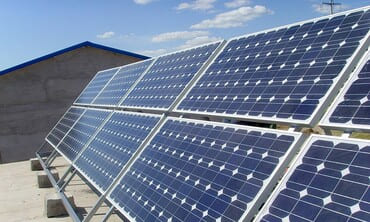
Pmax (Maximum Power) must be carefully balanced with the physical surface area of the sign. In high-wind regions, a larger solar panel increases the "windage" or drag on the signpost. - The Engineering Balance: RCTraffic utilizes high-density monocrystalline cells that deliver more wattage per square inch. This allows for a smaller physical footprint, reducing the wind load on the mounting structure while providing the necessary power to keep LEDs bright.
Traffic signs are frequently placed in "Urban Canyons" (e.g., Bangkok or Manila) or under tree canopies. - Bypass Diodes & Cell Efficiency: Our panels are engineered with advanced bypass diodes to mitigate the effects of partial shading. Even if 30% of the panel is shaded by a skyscraper or a tree branch, the remaining cells continue to harvest energy at peak efficiency, preventing the battery from entering a deep discharge state.
Most solar traffic signs use compact 6.4V or 12.8V LiFePO4 battery packs. - Vmp (Maximum Power Voltage): The panel's Vmp must be precisely matched to the charging threshold of the battery. If the Vmp is too low, the system will fail to charge in the heat of a tropical afternoon when the panel's voltage naturally drops. RCTraffic optimizes the Vmp to ensure a consistent "push" of energy into the battery even at 70°C+ panel temperatures.
The primary threat is Prolonged Cloud Cover. During a 4-month monsoon, direct sunlight is rare. - Strategy: "Over-paneling" (increasing the panel-to-load ratio to 2.5:1 or 3:1) ensures that even on the greyest days, enough "diffuse" light is captured to keep the sign operational.
The threats are Sand Accumulation and UV Degradation. - Dust Management: Dust can reduce output by 1% per day. RCTraffic panels for these regions feature hydrophobic, anti-static coatings that make it harder for sand to stick and easier for wind to blow it off.
In metropolitan areas, the Urban Heat Island (UHI) effect can raise ambient temperatures by 5-8°C. This accelerates battery degradation. RCTraffic enclosures use active thermal breaks to isolate the battery from the hot metal sign face.
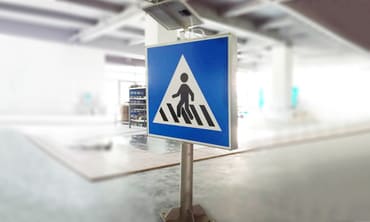
The way a sign uses power (its "Duty Cycle") is just as important as how it gets power.
A flashing amber beacon has a significantly different load profile than a constant-on speed limit sign. - Internal Resistance: Rapid flashing creates "pulse loads" on the battery. If the battery has high internal resistance (common in low-end lead-acid or poor-quality lithium), these pulses create internal heat. RCTraffic uses high-discharge-rate LiFePO4 cells that handle pulse loads with minimal thermal stress.
For road safety, "Autonomy" (the ability to run without sun) is a life-or-death metric. - DoD Management: We design for 5-7 days of autonomy. By keeping the daily DoD below 15-20%, we extend the LiFePO4 cycle life from 2,000 cycles to over 5,000 cycles, effectively doubling the sign's lifespan.
Because traffic sign batteries are often housed in small, sealed compartments, they are prone to "cooking" in the sun. - RCTraffic Solution: We use phase-change materials and reflective coatings on the battery housing to maintain internal temperatures below 45°C, even when the sign face is 70°C.
| Sign Type | Duty Cycle | Region (PSH) | Panel/Battery Config | Avg. DoD | Projected Battery Life |
|---|---|---|---|---|---|
| Solar Flashing Amber | 24/7 (50% Flash) | Tropical (3.0 PSH) | 20W / 12Ah | 12% | 6 - 8 Years |
| Solar Speed Limit | Night Only (Constant) | Arid (6.0 PSH) | 30W / 20Ah | 18% | 5 - 7 Years* |
| Solar Chevron (LED) | 24/7 (Pulse) | Urban (2.5 PSH) | 15W / 10Ah | 22% | 4 - 5 Years |
*Lifespan in arid regions is primarily limited by ambient heat, not cycle count.
We don't just make signs; we engineer safety systems.
Our proprietary controllers use Adaptive Brightness Algorithms. When the battery level drops below 40%, the controller subtly reduces LED intensity or adjusts the flash pattern to save energy while maintaining MUTCD compliance.
All electronics are housed in IP66-rated ADC12 aluminum. This material provides superior heat dissipation compared to plastic, which is critical for protecting the sensitive LED drivers and MPPT controllers.
Our signs are designed to meet MUTCD (USA), EN12352 (Europe), and regional standards like JKR (Malaysia) and DPWH (Philippines), ensuring that solar efficiency never comes at the cost of legal compliance.
Choosing the cheapest solar sign often leads to a "failed asset" within 12 months. For a sustainable ROI, road authorities should use this checklist: - [ ] Is the battery LiFePO4? (Avoid lead-acid/Gel). - [ ] What is the Autonomy rating? (Demand 5 days minimum). - [ ] Is the controller MPPT? (PWM is insufficient for urban shading). - [ ] Is the enclosure metal? (Plastic fails in high-UV environments).
Explore RCTraffic’s range of high-performance solar traffic signs here: https://www.rctraffic.com/products/traffic-sign/.
Q1: How many hours of sun does a solar sign need? A1: A well-engineered RCTraffic sign typically needs only 2-3 hours of Peak Sun (PSH) to stay fully charged. Our high-efficiency panels and low-power LEDs are designed for regions with limited sun.
Q2: Can solar signs work in tunnels or underpasses? A2: Not directly. However, we offer "Split-Type" systems where the solar panel is mounted outside the tunnel and connected via a cable to the sign inside.
Q3: What is the lifespan of an LED sign battery? A3: With RCTraffic’s LiFePO4 technology and smart BMS, you can expect 5 to 8 years of life, compared to just 1-2 years for traditional lead-acid batteries.
Q4: How to maintain solar panels on high-mounted signs? A4: Our panels feature "Self-Cleaning" tilts. In most regions, rain is sufficient to clean them. For desert areas, we recommend a simple annual wipe-down to remove heavy dust.
Q5: Why do some LED signs fade after a year? A5: This is usually due to "LED Over-driving" (to compensate for small batteries) or poor-quality polycarbonate lenses that yellow in the sun. RCTraffic uses UV-stabilized lenses and constant-current drivers to prevent fading.
Q6: Does humidity affect the sign's electronics? A6: Yes, high humidity can cause "creeping corrosion." This is why all RCTraffic internal boards are conformal-coated and the enclosures are IP66-rated.
To truly understand why RCTraffic signs outperform standard market offerings, we must examine the granular engineering of energy management.
The primary goal of a traffic sign is visibility. However, high brightness usually means high power consumption. RCTraffic utilizes Osram or Cree high-intensity LEDs with a luminous efficacy of over 180 lumens per watt. By using high-efficiency optics (lenses that focus light exactly where the driver needs it), we achieve superior visibility at 30-40% lower power levels than competitors. This reduced energy budget directly translates to smaller solar panels (lower wind load) and longer battery life (lower DoD).
While our solar charging uses MPPT, our LED driving uses high-frequency PWM (Pulse Width Modulation). This technique allows us to control brightness with extreme precision. More importantly, high-frequency PWM prevents the LEDs from overheating, which is the leading cause of "dimming" over time. By maintaining a cool junction temperature, we ensure that the sign remains MUTCD-compliant for its entire 10-year service life.
Traffic signs are exposed to more than just sun and rain; they face vibration from heavy vehicles and extreme wind gusts. - Tapered Pole Integration: Our solar mounts are designed to be aerodynamically neutral. - Vibration Dampening: Internal electronics are potted in specialized resins to prevent solder joints from cracking due to the constant micro-vibrations of roadside environments.
For a road authority, the "Price" of a sign is only the tip of the iceberg. - The Failure Cost: A failed sign at a dangerous intersection isn't just a maintenance headache; it's a liability risk. - Maintenance Labor: In regions like Australia or the USA, a single bucket-truck site visit can cost $500-$1,000. If a sign with a cheap lead-acid battery fails every 18 months, the authority spends 5x the sign's value in labor alone. - RCTraffic TCO: By engineering for an 8-year battery cycle, we eliminate 4 to 5 maintenance cycles, delivering a Total Cost of Ownership (TCO) that is 60% lower than "budget" alternatives.
When drafting tenders for solar traffic safety systems, include these specific technical requirements to ensure high-quality submissions:
At RCTraffic, we understand that a solar traffic sign is more than a piece of electronics; it is a life-saving device. By mastering the synergy between PV parameters, regional irradiance, and battery electrochemistry, we provide road authorities with the resilience they need to protect their citizens in any climate.
Explore RCTraffic’s range of high-performance solar traffic signs here: https://www.rctraffic.com/products/traffic-sign/.
Contact our engineering team today for a project-specific technical simulation and a customized safety infrastructure proposal.