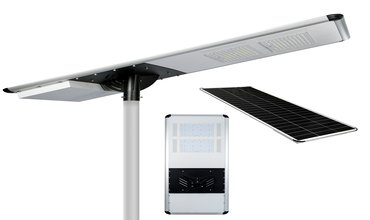
Africa is currently experiencing one of the most significant infrastructure transformations in history. As urbanization accelerates and the demand for safety and commerce grows, the need for reliable public lighting has never been more critical. However, traditional grid-tied lighting systems often fail to meet the unique challenges of the African continent, ranging from grid instability to extreme environmental conditions.
For government decision-makers, road contractors, and electrical distributors, the shift toward Solar Street Lighting is not just an environmental choice—it is a pragmatic economic necessity. But the African market is flooded with varying qualities of products, making the selection process difficult.
This comprehensive guide explores the specific engineering, procurement, and installation requirements for successful solar street lighting projects across Africa. We will dismantle the technical specifications required to survive the Sahel heat, the coastal salt mist, and the tropical rains, providing you with the knowledge to procure "Africa-Ready" infrastructure.
To understand why solar street lighting is the dominant solution, we must first analyze the infrastructure landscape. The energy sector in Africa is characterized by a distinct set of paradoxes: vast renewable potential versus limited grid access.
In many Sub-Saharan nations, the national grid is prone to frequent load shedding. Street lights connected to the main grid often become non-functional during peak evening hours—the exact time they are needed for safety. A solar street light operates independently of the grid, ensuring that even when the city goes dark, the roads remain illuminated.
Connecting a remote village or a new highway stretch to the nearest power substation can cost thousands of dollars per kilometer in cabling and trenching alone. The "Last Mile" problem makes grid extension financially unviable for many rural development projects. Solar lighting bypasses this entirely, creating decentralized micro-infrastructure.
Darkness hinders economic growth. Markets cannot operate past sunset, and road accidents increase drastically at night. Studies across West and East Africa have shown that reliable street lighting reduces crime rates and extends commercial trading hours by up to 30%, directly impacting local GDP.

Procurement officers and contractors often hesitate to switch to solar due to negative past experiences or market confusion. Addressing these pain points is the first step toward a successful project.
When engineered correctly, solar street lights offer a Return on Investment (ROI) that grid lighting cannot match. The advantages go beyond being "green"; they are fundamentally about reliability and cost control.
While the initial capital expenditure (CapEx) for high-quality solar lights may be higher than a sodium vapor bulb, the Operational Expenditure (OpEx) is near zero. There are no monthly electricity bills, no transformer rentals, and no copper cabling costs (which is also a theft risk).
Solar lights are modular. If one unit is damaged by a vehicle, the rest of the street remains lit. This contrasts with grid systems where a cable fault can black out an entire district. For a detailed look at how these systems are categorized, you can review our Solar Street Light Product Overview.
One size does not fit all. A light designed for the mild climate of Europe will fail catastrophically in the heat of Mali or the humidity of Mombasa. We categorize Africa into three primary stress zones for lighting equipment.
Regions: Niger, Chad, Northern Nigeria, Sudan, Egypt.
Challenge: Temperatures can exceed 45°C (113°F). Standard Lithium-ion batteries degrade rapidly above 40°C. Sandstorms (Harmattan) cover solar panels, reducing efficiency.
Solution: Equipment must use LiFePO4 (Lithium Iron Phosphate) batteries which remain stable up to 60°C. Panels need a steep angle to minimize dust accumulation.
Regions: Lagos, Accra, Mombasa, Dar es Salaam, Cape Town.
Challenge: Salt mist from the ocean accelerates rust on steel poles and aluminum housings. High humidity penetrates IP65 seals.
Solution: Requires IP67-rated housings and hot-dip galvanized poles with marine-grade powder coating to prevent structural failure.
Regions: DRC, Uganda, Southern Nigeria, Cameroon.
Challenge: Cloud cover can persist for 5–7 days, preventing battery recharge.
Solution: The system requires "Autonomy Days" sizing. The battery capacity must be 3x to 5x the daily consumption to ensure the light stays on during a week of rain.
| Region/Climate | Primary Threat | Required Battery Tech | Housing Requirement |
|---|---|---|---|
| Sahel / Desert | Extreme Heat (>45°C) | High-Temp LiFePO4 | Heat-dissipating Aluminum |
| Coastal Cities | Salt Corrosion | Sealed LiFePO4 | Marine-grade Anti-corrosion |
| Tropical Rain Belt | Lack of Sun | Oversized Capacity | IP67 Waterproofing |
When contractors search for lights, they are often confused by terminology. Here is the technical clarity required for making a purchase decision.
In the past, people bought "100W" lights. Today, LED efficiency varies. A cheap 100W chip might yield 80 lumens/watt (8,000 lumens), while a premium chip yields 170 lumens/watt (17,000 lumens). Always buy based on Lumens, not Watts.
Based on typical African road widths (7m – 12m), here are general recommendations:
| Road Type | Road Width | Pole Height | Recommended Lumens |
|---|---|---|---|
| Rural Village Path | 4-5 meters | 5-6 meters | 3,000 - 5,000 LM |
| Urban Residential | 6-8 meters | 6-8 meters | 6,000 - 8,000 LM |
| Main Avenue | 10-12 meters | 8-10 meters | 10,000 - 12,000 LM |
| Highway | 15+ meters | 10-12 meters | 15,000 LM+ |
Designing a system that lasts 5+ years requires math, not guessing. Here is the formula for a durable configuration.
In Africa, we typically get 4.5 to 5.5 "Peak Sun Hours" per day.
Formula: Panel Wattage x Peak Sun Hours x 0.7 (Efficiency Loss) = Daily Power Generation.
If your panel is too small, the battery will never fully charge, leading to sulfation or premature failure.
Never drain a battery 100%. For LiFePO4, we aim for a maximum 80% discharge to ensure thousands of cycles.
Requirement: If the light consumes 400Wh per night, the battery should be at least 500Wh to handle one night, but strictly speaking, it should be 1200Wh+ to handle 3 cloudy days (Autonomy).
PWM controllers are outdated. MPPT (Maximum Power Point Tracking) controllers are mandatory for African projects. They are 20-30% more efficient at converting sunlight to energy, which is crucial during the Harmattan haze or rainy season.
Different environments require different lighting profiles. Our solutions adapt to these specific sectors.
Governments often seek "High Impact, Low Cost" solutions. Here, All-in-One lights with motion sensors are ideal. They dim to 30% brightness when no one is around, saving battery, and jump to 100% when a pedestrian passes. This extends battery life dramatically.
Mines in Zambia, DRC, or South Africa are dusty and have high vibration from heavy trucks. Lights here require reinforced mounting brackets and dust-proof glass lenses that can be easily wiped clean.
Marketplaces require "Dusk to Dawn" constant lighting for security. Motion sensors are not suitable here because the area is always busy. High-capacity split-type systems are recommended to provide constant high brightness.
For African importers, the logistics are as important as the product.
Most African nations have strict pre-shipment verification standards. We ensure compliance with:
Solar lights contain Lithium batteries, which are classified as Dangerous Goods (DG) UN3480. They require specialized packaging and DG declarations for sea freight. Working with an experienced supplier prevents your container from being detained at the port of origin.
While client confidentiality is paramount, generic examples of our engineering capabilities across the continent include:
Challenge: A 10km stretch of coastal road with failing grid lights due to cable theft and salt corrosion.
Solution: Installed 120W All-in-One Solar Lights with Marine-Grade powder coating.
Outcome: Zero electricity costs, theft eliminated (no cables), and IP67 rating withstood tropical storms.
Challenge: Rural maternity clinics in off-grid zones operated in darkness.
Solution: 60W Integrated Solar Lights installed in perimeters.
Outcome: Increased safety for staff and patients, allowing 24/7 access to emergency services.
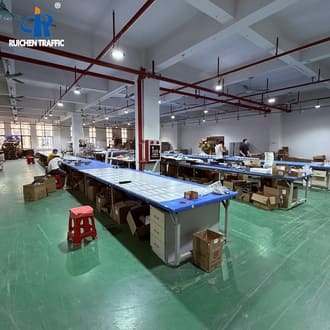
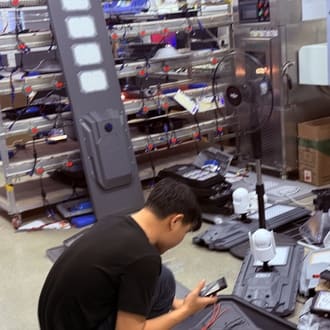
At Henan Ruichen Traffic Equipment Co., Ltd, we do not just sell lights; we sell reliability. We understand that a failed light in a remote area is a reputational disaster for the contractor.
For a look at our flagship model designed specifically for high-demand projects, please visit our Featured Solar Street Light Model.
Solar street lighting is the future of African infrastructure. It bypasses the limitations of the grid, saves millions in operational costs, and improves safety. However, success depends on choosing a partner who understands the harsh realities of the African environment.
Don't risk your reputation on generic, low-grade products. Partner with a manufacturer that engineers solutions specifically for the heat, dust, and challenges of the continent.
Whether you are bidding for a government tender, stocking a warehouse, or planning a community project, we are ready to support you with technical data, competitive pricing, and logistical expertise.
Contact us today for a free consultation and lighting design simulation.
.jpg)
.jpg)
.png)