Saudi Arabia’s ambitious Vision 2030 and major infrastructure projects demand sustainable lighting solutions across its desert cities and highways. Planning in Riyadh, Jeddah, and the Eastern Province increasingly calls for solar street light in Saudi Arabia systems that can operate reliably in extreme conditions. In these environments—where summer heat routinely exceeds 50°C and frequent sandstorms strike—specifiers must carefully define requirements and select a proven manufacturer. This guide outlines the key considerations for pre-sales technical planning and supplier selection for high-reliability, desert-ready solar street lighting. It highlights RCTraffic’s role as a trusted OEM/ODM factory partner capable of supplying robust, high-volume lighting systems for large Saudi projects.
Environmental and Operational Challenges
Saudi Arabia’s desert climate poses harsh challenges for solar lighting. Daytime temperatures on road surfaces often exceed 50°C, causing accelerated wear on electronics and batteries. Blowing sand and dust accumulate on panels and fixtures, dramatically reducing energy output—studies show soiling can cut solar generation by up to 40–50% unless cleaned. Frequent sandstorms also test the sealing and impact resistance of luminaires. In practice, many conventional street lights in the region failed due to inadequate IP sealing and overheating7]7}. Consequently, designs must anticipate extreme ambient heat, abrasive sand, and UV exposure. For example, project specifiers typically require IP65/66-rated fixtures, corrosion-resistant housings, and components rated for high-temperature operation. These factors are critical when designing solar lighting for Saudi roads and smart-city developments like NEOM, where uninterrupted illumination is non-negotiable.
.jpg)
Key Technical Specifications for Desert-Proof Solar Lights
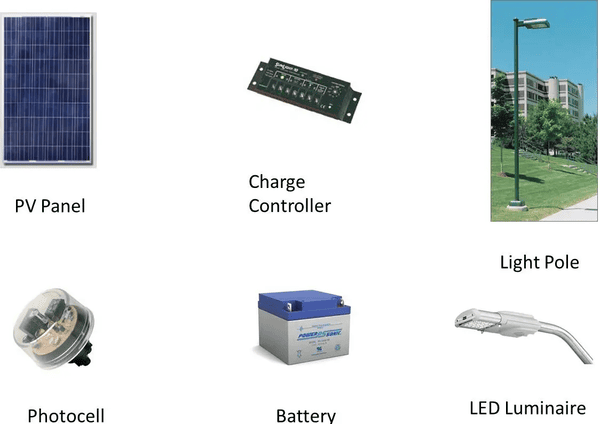
- High-Efficiency Solar Modules: Use top-grade monocrystalline panels (≥21% efficiency) to maximize harvest. Panels should be tempered glass with anti-reflective coatings and be mounted at tilted angles so wind and rain can clear dust. Even with cleaning, dust can still reduce output by up to ~50% annually, so designers often oversize panels or include self-cleaning brushes for high-dust sites12]12}. RCTraffic’s solar modules exceed 21% efficiency to capture maximum sunlight in Saudi’s clear-sky conditions.
- Advanced Battery Technology: Lithium batteries (especially LiFePO₄ chemistry) are required for desert use. LiFePO₄ cells tolerate high temperatures (50°C+) and have long cycle life (>2000 cycles). By contrast, lead-acid batteries lose capacity rapidly in the heat and often fail after 1–2 years. Each light should include a smart Battery Management System (BMS) to prevent overcharge/discharge and balance cells. RCTraffic’s street lights ship with protected LiFePO₄ banks rated for thousands of cycles, ensuring years of service under Saudi conditions.
- MPPT Charge Controllers: Maximum Power Point Tracking (MPPT) controllers are essential to optimize solar charging under variable sunlight. High-efficiency MPPT units (≥95%) extract more energy than basic PWM controllers. RCTraffic uses patented dual-MPPT controllers that outperform standard units. Advanced controllers also enable programmable dimming or motion sensing to conserve power, which can extend operation through multi-day cloudy periods (up to 6+ nights when needed).
- High-Performance LED Luminaires: LEDs from reputable manufacturers (e.g. Philips, Osram) with luminous efficacy ≥200 lm/W are recommended. Select appropriate correlated color temperature (typically 5000–6500K) and CRI (>80) for clear visibility in dusty air. Optical designs (such as 75°×150° “batwing” beams) provide even road coverage and reduce glare. Drivers should be rugged and rated IP65 or higher. For example, RCTraffic’s Project-grade (RC-ST) lights deliver >200 lm/W with durable optics for uniform lighting.
- Robust Enclosures and Hardware: All enclosures must be dust-tight (IP65/66) and corrosion-resistant. Housings made of die-cast aluminum (ADC12) with thick paint or powder coating resist rust and heat. Impact protection of IK08 or better is advised for debris-driven impacts. RCTraffic lights include built-in lightning and surge protection and have waterproof seals. Poles should be heavy-gauge Q235 steel (≥3 mm wall thickness) with hot-dip galvanizing. In coastal Jeddah or Eastern Province projects, additional salt-fog-resistant coatings are required.
- Smart and Remote Control (Optional): For large networks, remote monitoring can improve maintenance. RCTraffic offers IoT-enabled controllers and smartphone app control. These features allow central scheduling, fault alerts, and adaptive dimming – useful to stretch battery life on overcast nights.
Pre-Sales Planning and Project Requirements
Effective pre-sales engineering ensures the solar lighting system meets site conditions and project goals. Key steps include:
- Site Assessment: Survey each location’s solar irradiance, shading, and dust levels. In Riyadh’s open desert, insolation is extremely high, but in Jeddah’s coastal districts salt corrosion must be accounted for. Map required illuminance (lux) and beam layouts for different road types (highways vs. local streets).
- Performance Specification: Define required lighting levels, autonomy (nights without sun), and dimming schedules. Determine how many cloudy days to allow, which sets battery sizing. Confirm compliance with Saudi standards: solar street lights must meet SASO 2902 energy efficiency and labeling requirements.
- Environmental Data: Use local climate data (sunshine hours, temperature, wind, humidity) to size components. For example, Riyadh averages >3,000 hours of sun annually; even so, designers often include margin for dust losses. For coastal Jeddah, ensure all parts have marine-grade corrosion protection.
- Budget and Scale: Estimate total cost of ownership rather than lowest bid. Very low-cost offers (especially underpricing the market) often use inferior components (e.g. recycled-grade solar cells, generic LEDs, lead-acid batteries) that fail early. In contrast, mid-to-high tier products with traceable parts provide longer life and lower maintenance.
- Documentation: Prepare a detailed specification sheet including lumen output, color, warranty, and test requirements. Require manufacturers to submit datasheets, LM-80 test reports for LEDs, IEC/UL certifications for components, and sample testing plans.
Supplier Evaluation and Selection Criteria
Choosing the right supplier is as crucial as the product itself. Key criteria include:
- Certifications & Standards: Verify compliance with international and local standards. Products should have CE/IEC certification, and specifically SASO 2902 approval for Saudi markets. Check that solar panels meet IEC 61215/61730 and batteries meet IEC 62133 or UL 1642. Quality test reports (e.g. IPx5 water ingress, IK impact, thermal cycling) should be available.
- Track Record and Capacity: Select manufacturers with proven experience in solar street lighting. For example, Henan Ruichen Traffic (RCTraffic) has 12+ years in traffic equipment and multiple product patents. It has supplied lighting systems to over 60 countries. Ensure the supplier can handle large orders: RCTraffic’s factory can fulfill orders of thousands of units in short lead times (sample orders in days; >1,000 sets in ~2–3 weeks).
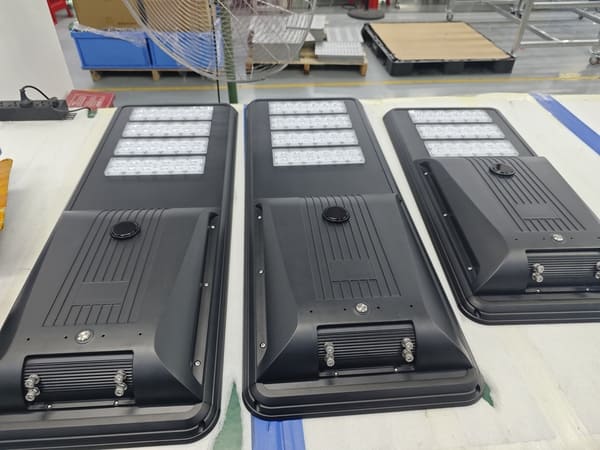
- Quality Control and Testing: The supplier should perform stringent QC. Look for evidence of production testing (e.g. accelerated aging and waterproofing tests). RCTraffic’s product pages highlight simulated aging and IP tests as part of QC (see “Aging Test” and “Waterproof Test” on factory display). Audit the factory if possible to inspect assembly lines and testing facilities.
- OEM/ODM Flexibility: For customized projects, the supplier must support OEM/ODM services. RCTraffic explicitly welcomes OEM/ODM orders, customizing lights and poles to client drawings. Low minimum order quantities (as low as one unit for samples) also allow trial runs.
- Warranty and Support: Ensure the terms are clear. Industry best practice is ≥5 years on solar panels, ≥3 years on batteries, and ≥2 years on luminaires/LEDs. RCTraffic offers multi-year warranties (e.g. 3 years on electronics) and promises rapid after-sales response (24-48h support). A reliable supplier will also provide installation guidance and spare parts.
- Local References: Prefer suppliers with existing projects in Saudi or similar climates. RCTraffic’s lighting has been deployed by major international EPC contractors and local cities (serving as OEM factory for large infrastructure projects), demonstrating its suitability for the Gulf region.
Why RCTraffic is the Ideal OEM/ODM Partner
As a dedicated solar lighting OEM/ODM manufacturer, RCTraffic offers key advantages for Saudi projects:
- Proven Expertise: RCTraffic (Henan Ruichen Traffic) has focused on solar street lighting for over 12 years and holds multiple industry patents. Its R&D team has developed specialized models (e.g. the UL Series self-cleaning lights) tailored for harsh environments.
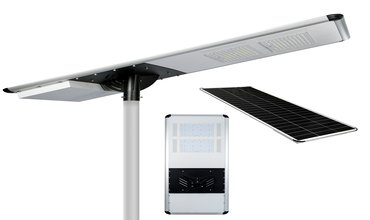
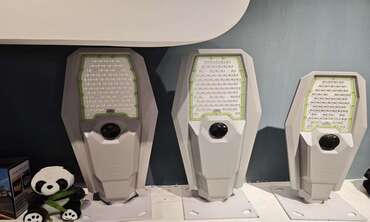
- Comprehensive Product Range: The company produces lights from small 6W fixtures up to 300W highway lights. For example, the RC-UL All-in-One Self-Cleaning Solar Street Light combines a >21% panel, built-in LiFePO₄ battery (>2000 cycles) and PRO-double MPPT controller. The RC-ST Project-Grade Light offers >200 lm/W LEDs and is built for municipal and highway use. For custom layouts, the RC-SP Split-Type Light separates the panel from the luminaire for flexible installation.
- High-Volume Manufacturing: RCTraffic’s large factory supports high-volume orders. According to their Q&A, bulk production can deliver thousands of steel light poles or fixtures in weeks. This meets the scale needed for Saudi giga-projects.
- Quality and Durability: Products use premium materials: ADC12 die-cast aluminum bodies, tempered glass panels and marine-grade steel poles. Each unit undergoes comprehensive testing before shipment (aging, waterproof, etc.) to ensure it meets the desert-proof specification. RCTraffic’s global clients validate the long service life of these systems under harsh sun and dust.
- Strong Support and Partnership: RCTraffic maintains overseas offices and international sales teams, enabling local support. Its OEM/ODM policy means it will work closely with clients and EPC firms to match any specification. In fact, RCTraffic acts as the factory partner for many large contractors in Saudi, delivering thousands of reliable solar street lights as a trusted supplier.
- Compliance and Certification: RCTraffic products are designed to meet international standards. For example, they reference compliance with SASO 2902 for Saudi markets. Engineers can cite official certificates from the company to satisfy local regulators.
- Value Beyond Price: RCTraffic’s factory-direct model provides competitive pricing for bulk orders, but without compromising quality. In head-to-head comparisons, RCTraffic emphasizes quality components and rigorous QC, unlike some cheap alternatives that cut corners. The long-term reliability of RCTraffic lights often yields a lower total cost of ownership for large projects.
Conclusion
Deploying solar street lighting in Saudi Arabia’s challenging environment requires thorough specification and a reliable partner. By focusing on high-efficiency panels, rugged batteries, quality LEDs, and durable construction (the essentials of desert-proof solar lighting), planners can ensure projects meet Vision 2030 goals. RCTraffic’s experience as an OEM solar manufacturer and its proven track record make it a compelling supplier for giga-scale lighting deployments. For more information and product details, review RCTraffic’s Solar Street Light catalog (e.g. the UL, ST and SP series linked above) and contact their team for customized solutions. With the right technical choices and supplier, solar street lights in Riyadh, Jeddah and the Eastern Province will shine reliably for years to come60]60}.

.jpg)