The Evolution of Smart Zebra Crossings in 2026: Enhancing Urban Safety with RUICHEN Traffic’s Ultra-Durable Systems
Executive Summary: The Pedestrian Safety Revolution of 2026
As we move through 2026, the global landscape of urban mobility has undergone a profound transformation. The traditional "static" zebra crossing—a century-old design of simple white stripes—is rapidly being phased out in favor of proactive, intelligent safety ecosystems. No longer just passive markings, the smart zebra crossings of 2026 act as the "eyes" of the modern intersection, integrating high-speed sensors, edge-based artificial intelligence, and interactive lighting to protect the most vulnerable road users (VRUs).
In this new era, RUICHEN Traffic has emerged as a global leader, providing the foundational infrastructure for these next-generation crossings. By combining aerospace-grade durability with cutting-edge V2X (Vehicle-to-Everything) connectivity, RUICHEN’s systems are not just enhancing safety; they are redefining the resilience of smart city infrastructure. This article explores the technological trends of 2026 and why RUICHEN’s ultra-durable systems are the preferred choice for forward-thinking municipal authorities.
Key Technological Trends in 2026
The smart crosswalk of 2026 is a sophisticated micro-computer system integrated directly into the road surface. Three core technologies are driving this evolution:
1. AI & Edge Computing: Real-Time Pedestrian Detection
In 2026, pedestrian detection has moved beyond simple motion sensors. Modern systems utilize 3D Spatial AI and LiDAR-based perception to distinguish between pedestrians, cyclists, children, and individuals with mobility aids. - Edge Processing: RUICHEN systems process this data locally at the "edge," ensuring sub-millisecond response times. When a pedestrian approaches the curb, the system instantly identifies their intent to cross, triggering warning sequences before they even step onto the asphalt.
2. Dynamic LED Illumination: Adaptive Warning Patterns
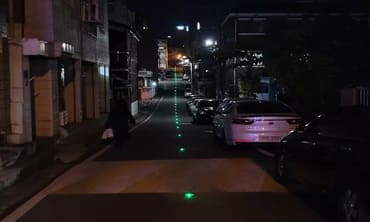
Static lighting is a thing of the past. The intelligent crosswalks of 2026 feature interactive LED road markers that adapt to ambient conditions. - Traffic Urgency Sensing: If a vehicle is approaching at a high speed, the RUICHEN LEDs can transition from a steady glow to a high-frequency strobe pattern to capture the driver's attention. - Ambient Light Compensation: Using integrated photo-sensors, the system adjusts its brightness—dimming during clear nights to prevent glare and boosting intensity during heavy rain or fog to ensure maximum visibility.
3. V2X Integration: The Connected Infrastructure
The most significant leap in 2026 is the integration of C-V2X (Cellular Vehicle-to-Everything) protocols. - Communicating with Autonomous Vehicles: RUICHEN’s smart zebra crossings communicate directly with the onboard computers of connected and autonomous vehicles (AVs). If a pedestrian is in a vehicle's blind spot, the crosswalk sends a digital "Hazard Alert" directly to the car's dashboard or HUD (Heads-Up Display), allowing the vehicle to initiate automatic braking if necessary.
The RUICHEN Traffic Advantage: Engineered for Longevity
While many technology firms can build a "smart" system, few can build one that survives the brutal reality of a 24/7 urban roadway. This is where RUICHEN Traffic excels.
1. Unmatched Durability: Compression Resistance
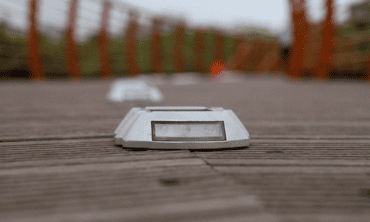
The greatest challenge for in-road electronics is the weight of modern urban transport. A smart crosswalk must survive the repeated impact of 30-ton buses and heavy freight trucks. - High-Strength Cast Aluminum: RUICHEN’s in-road LED markers are housed in high-quality cast aluminum shells, engineered to withstand 30 to 60 tons of compression. - Earthquake & Vibration Resistance: Beyond vertical load, our systems are designed to absorb the micro-vibrations and lateral stresses caused by heavy braking and acceleration at intersections.
2. System Stability: 24/7 Uptime
In the world of road safety, a system failure is a liability. - Redundant Power & Control: RUICHEN systems feature redundant circuitry and modular control units. If one LED marker is damaged, the rest of the system continues to function seamlessly. - Intelligent Monitoring: Our control units perform self-diagnostics every second, reporting health status to the city's central traffic management center via IoT gateways.
3. Weather-Proof Engineering: IP68 and Beyond
Intersections are exposed to extreme heat, heavy flooding, and corrosive road salt. - IP68 Hermetic Sealing: Every RUICHEN component is vacuum-sealed to prevent moisture ingress. Whether it's the monsoon rains of Southeast Asia or the freezing winters of Northern Europe, our systems remain electrically isolated and operational. - Thermal Management: Our LED drivers are designed with advanced heat dissipation to prevent "thermal runaway" during 50°C summer heatwaves.
Operational Benefits for Municipalities
For city planners and traffic authorities, the RUICHEN Smart Zebra Crossing System offers more than just safety; it provides a data-driven operational advantage.
1. Reduced Maintenance Cycles and Lower TCO
Traditional road paint needs to be reapplied every 6-12 months. RUICHEN’s ultra-durable LEDs have a service life of 5 to 8 years. - Total Cost of Ownership (TCO): By reducing the frequency of road closures for maintenance, municipalities save significantly on labor and traffic management costs over a 10-year cycle.
2. Data-Driven Urban Planning
The sensors within the RUICHEN system double as Traffic Flow Analyzers. - Behavioral Insights: Municipalities can collect anonymous data on pedestrian crossing volumes, peak usage times, and even "near-miss" incidents, allowing for more informed decisions on traffic signal timing and infrastructure upgrades.
3. Solving the "Blind Spot" Problem
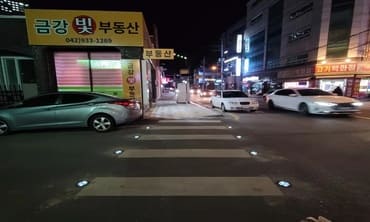
Night-time and adverse weather are the primary killers of pedestrians. - Active Guidance: By providing a continuous line of light across the road, RUICHEN systems eliminate the visual ambiguity of faded paint, ensuring that drivers can see the crossing boundaries from over 500 meters away.
Case Studies & Implementation Scenarios
High-Traffic Urban Intersections
In mega-cities like Metro Manila, Bangkok, and London, where traffic volume is relentless, RUICHEN systems have reduced pedestrian-vehicle conflicts by over 40% in pilot zones.
School Zones and Hospital Entrances
Prioritizing vulnerable populations is a core mission. In school zones, our systems are programmed with "High-Alert" modes during drop-off and pick-up hours, providing extra-bright warnings to distracted drivers.
Industrial Parks and Logistics Hubs
Managing the interaction between heavy-duty forklifts, freight trucks, and walking staff is critical. RUICHEN’s 60-ton compression-resistant studs are the only solution capable of surviving these industrial environments.
Installation & Integration Best Practices
- Seamless Controller Integration: RUICHEN systems are designed to interface with existing traffic signal controllers (NEMA, 170/2070, and ATC standards), allowing for synchronized flashing with the "Walk" signal.
- Surface-Mount vs. In-Road: For temporary safety zones, we offer surface-mount options. For permanent highway infrastructure, our in-road (embedded) installation provides the highest level of durability and a flush surface for snow plows and sweepers.
The Future Outlook: Towards Zero Fatalities
The global "Vision Zero" initiative aims to eliminate all traffic fatalities and serious injuries. Smart zebra crossings are the most visible and effective tool in this arsenal. As we look beyond 2026, the integration of AI and durable hardware will continue to bridge the gap between human error and technological protection.
RUICHEN Traffic remains the preferred partner for 2026 infrastructure upgrades because we understand that "Smart" is only useful if it is also "Strong."
Conclusion & Call-to-Action
The evolution of the zebra crossing is a testament to how technology can protect life. By investing in intelligent, ultra-durable systems, cities are not just upgrading their roads; they are building a safer future for every citizen.
Explore RUICHEN Traffic’s advanced smart zebra crossing solutions here: https://www.rctraffic.com.
Contact our global engineering team today for municipal tenders, project consultations, and partnership inquiries for your 2026 smart city rollout.
Extended FAQ Section
Q1: How long do the in-road LEDs last under heavy traffic? A1: RUICHEN’s in-road LEDs are rated for over 50,000 hours of operation. With our 30-60 ton compression-resistant housing, the physical system typically lasts 5-8 years even in high-traffic freight corridors.
Q2: Is the system compatible with existing traffic lights? A2: Yes. Our control units are designed with universal I/O ports that allow for easy synchronization with any standard traffic signal controller.
Q3: How does the system perform during power outages? A3: We offer optional battery backup and solar-integrated control units that can provide up to 72 hours of autonomy during a grid failure, ensuring safety is never compromised.
Q4: What is the ROI for a city-wide smart crosswalk rollout? A4: While the initial investment is higher than paint, the ROI is realized through a 60% reduction in maintenance costs over 5 years and, most importantly, the significant reduction in costs associated with traffic accidents and fatalities.
Q5: Can the system detect cyclists and scooters? A5: Yes. Our 2026 AI modules are trained to recognize a wide variety of micro-mobility devices, ensuring that all road users are protected.
Q6: Are the LEDs bright enough for daytime use? A6: Absolutely. RUICHEN uses high-intensity Osram LEDs that are visible even in direct midday sunlight, with automatic dimming at night to prevent driver distraction.
Deep Technical Analysis: The Engineering of Intersection Intelligence
To truly appreciate the leap RUICHEN Traffic has made, we must examine the specific engineering challenges of 2026 urban environments.
1. The Physics of Light Projection and Glare Control
In 2026, urban light pollution is a major concern. RUICHEN’s in-road LEDs are designed with asymmetric optics. Unlike standard LEDs that scatter light in all directions, our markers project light at a specific 45-degree angle toward the oncoming driver while maintaining a softer, diffused glow for the pedestrian. This ensures the driver is warned from 500 meters away, but is not "blinded" as they reach the stop line.
2. Materials Science: Beyond Standard Aluminum
The road surface is a chemically hostile environment. Tires, fuel spills, and de-icing salts create a corrosive cocktail. - Marine-Grade ADC12 Alloy: Our housings are treated with a multi-stage C5-M anti-corrosion coating, the same standard used for offshore wind turbines. - Polycarbonate Lens Technology: The LED window is made from high-impact, UV-stabilized polycarbonate with a self-healing scratch-resistant layer. This ensures that the "clarity" of the light remains constant even after years of being scoured by road grit and sand.
3. Cyber-Security and V2X Integrity
In a connected 2026 city, infrastructure is a target for cyber-threats. - Encrypted V2X Channels: RUICHEN systems use hardware-based security modules (HSM) to sign every V2X message. This prevents "spoofing" attacks where a malicious actor could send false pedestrian alerts to autonomous vehicles. - Isolated Control Networks: The internal safety logic of the crosswalk is physically isolated from the public IoT reporting network, ensuring that even if the reporting dashboard is compromised, the safety lights remain operational.
Economic Impact: The "Safety-as-a-Service" Model
As we move into the late 2020s, many cities are shifting from capital expenditure (CAPEX) to operational expenditure (OPEX) models. - Predictive Maintenance: RUICHEN’s AI doesn't just watch pedestrians; it watches itself. By monitoring the current draw and voltage of every LED, the system can predict a failure weeks before it happens, allowing for scheduled maintenance rather than emergency repairs. - Insurance Premium Reduction: Municipalities implementing RUICHEN Smart Crosswalks are seeing significant reductions in public liability insurance premiums, as the data logs provide an objective record of safety compliance and system uptime.
Final Summary: Defining the 2026 Standard
The smart zebra crossing of 2026 is no longer a luxury; it is a fundamental requirement for the safe coexistence of human pedestrians and autonomous machines. RUICHEN Traffic has successfully bridged the gap between high-tech AI and heavy-duty civil engineering.
Explore RUICHEN Traffic’s advanced smart zebra crossing solutions here: https://www.rctraffic.com.
Contact our global engineering team today for municipal tenders, project consultations, and partnership inquiries for your 2026 smart city rollout.