
As we navigate through 2026, the landscape of global road safety is undergoing a fundamental transformation. The era of passive, static traffic signage is being eclipsed by a new generation of intelligent, energy-autonomous infrastructure. In this context, solar radar speed signs—also known as speed feedback signs or driver feedback signs—have emerged as a critical tool for municipal road authorities and law enforcement agencies worldwide.
The psychological impact of these signs on driver behavior is profound. Studies in 2025 and 2026 have consistently shown that speed feedback signs can reduce average vehicle speeds by 10-20%, with even greater effectiveness in high-risk zones like school crossings and hazardous curves. Unlike traditional enforcement methods, these signs provide immediate, non-punitive feedback that encourages voluntary compliance, creating a safer environment for pedestrians and cyclists.
Furthermore, solar-powered radar signs are becoming the gold standard for "Smart Cities" and "Vision Zero" initiatives. By eliminating the need for expensive trenching and grid connectivity, they allow for rapid deployment in areas where safety is most needed. At the forefront of this revolution is the RUICHEN Radar Speed Sign Series, which has set the industry benchmark for reliability, advanced engineering, and data-driven safety.
For years, road authorities have faced significant hurdles when deploying radar technology. In 2026, engineering innovations have finally solved these historical "pain points."
One of the most common complaints about early radar signs was their inability to distinguish between specific vehicles in multi-lane traffic or their tendency to trigger "false positives" from background movement (like swaying trees or metallic fences).
Modern 2026 systems, such as those from RUICHEN, utilize high-precision Doppler radar technology (often K-band or Ka-band). These systems employ advanced digital signal processing (DSP) to filter out background noise and focus on the largest moving target in the detection zone. High-end models now feature "multi-lane discrimination," allowing the sign to accurately track and display the speed of the vehicle most likely to pose a safety risk, even in heavy urban traffic.
A critical failure point for older solar infrastructure was its dependency on consistent, direct sunlight. In regions with long monsoons (like Southeast Asia) or dark winters (like Northern Europe), signs would often go dark after three or four days of overcast weather.
The solution in 2026 is Energy Resilience Engineering. RUICHEN signs utilize high-conversion monocrystalline solar panels (17V/4W or higher) paired with Smart Energy Controllers. These controllers don't just charge the battery; they manage the energy budget. By using AI-driven algorithms to predict energy harvesting based on historical weather patterns, the system can dynamically adjust LED intensity or enter a "Power-Save Mode" to ensure 100% uptime, even through 10+ days of continuous rain.
Historically, collecting data from radar signs required a technician to physically visit the site with a laptop. In 2026, the demand for Real-Time Data Integration is paramount.
Authorities now require signs that act as remote data nodes. RUICHEN’s 2026 series offers seamless integration with cloud-based dashboards via LTE-M or NB-IoT. Road safety officers can now monitor average speeds, traffic volume, and peak violation times from their central office. This data is invaluable for justifying infrastructure budgets and planning targeted law enforcement patrols.
The true cost of a radar sign isn't the purchase price; it's the Total Cost of Ownership (TCO). Budget signs often require battery replacements every 18 months and housing repairs due to UV-induced brittleness or moisture ingress.
In 2026, high-quality hardware is the only fiscally responsible choice. By using marine-grade ADC12 aluminum and LiFePO4 batteries, the service interval for a RUICHEN sign is extended to 5-8 years. When you factor in the cost of bucket truck rentals and road closures for each maintenance visit, a premium sign typically pays for itself within the first three years.
The roadside is a brutal environment. In 2026, material science is what separates professional infrastructure from "consumer-grade" gadgets.
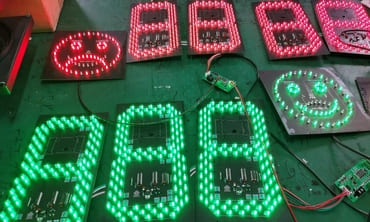
In 2026, "brightness" is no longer enough; we focus on Photometric Precision. * Ultra-Bright, Wide-Angle LEDs: RUICHEN uses specialized LED beads that provide a visual distance of over 800 meters. These LEDs are engineered with a wide viewing angle to ensure the sign is readable from multiple lanes without causing "blinding" glare for the driver. * Anti-Glare Sheeting: To maximize daytime visibility, signs are often paired with 3M Engineering Grade or Diamond Grade reflective film. This ensures the sign remains a functional static warning even if the electronics were to fail (a critical "fail-safe" requirement in many jurisdictions).
Moisture and dust are the enemies of radar electronics. * Hermetic Sealing: In 2026, an IP65 rating is considered the bare minimum. Professional-grade RUICHEN signs often target IP66 or IP67, meaning they are protected against powerful water jets and can even survive temporary submersion during urban flash floods. This level of sealing is essential for protecting the sensitive Doppler radar modules and internal circuitry.
The "brain" and "heart" of the sign must be engineered for 24/7 reliability.
In 2026, Lithium Iron Phosphate (LiFePO4) has officially replaced lead-acid as the only viable choice for professional signage. * Extreme Temperature Resilience: Unlike standard lithium-ion, LiFePO4 remains stable and efficient from -40°C to +80°C. * Long Cycle Life: Grade-A LiFePO4 cells provide over 3,000 cycles at 80% Depth of Discharge (DoD), translating to a 7-10 year operational lifespan.
To maximize energy efficiency, 2026 signs utilize Ambient Light Sensors. The system automatically boosts brightness during high-noon sun to maintain contrast and dims to 10-15% intensity at night. This not only prevents driver glare but also reduces battery consumption by up to 60% during the night cycle.
As we move toward a connected future, radar signs are evolving into multi-functional safety platforms.
In 2026, the RUICHEN series can be equipped with IoT modules for Real-Time Monitoring. * Remote Configuration: Change speed thresholds, flashing patterns, or schedules via a secure web portal or mobile app. * Health Alerts: Receive automatic notifications if the battery voltage drops or if a component failure is detected.
Psychological studies show that color-coded feedback is more effective than white-only displays. * Green: "Thank You" (Below speed limit). * Yellow: "Caution" (Slightly above limit). * Red: "Slow Down" (Significant violation). RUICHEN signs utilize high-contrast RGB or dual-color LEDs to provide this intuitive feedback.
"Stealth Mode" allows the sign to collect traffic data without displaying the speed to drivers. This is used by urban planners to establish a "baseline" of road behavior before activating the feedback, allowing for a precise measurement of the sign's effectiveness (ROI).
Buying a radar sign in 2026 is an engineering decision, not just a procurement task.
Ensure the sign meets: * MUTCD (11th Edition): Specifically Chapter 2B and 2L requirements for font size, color, and placement. * CE & RoHS: For electrical safety and environmental standards. * Local DOT Standards: Many regions have specific requirements for "flashing frequency" and "automatic dimming."
Look for signs that support: * Permanent Pole Mounts: For long-term safety zones. * Portable Trailers: For temporary work zones or law enforcement "hotspot" monitoring. * Universal Brackets: RUICHEN signs are designed for easy installation on standard round, square, or U-channel posts.
A reliable global supplier like RUICHEN Traffic offers a 3-5 year comprehensive warranty and dedicated technical support. Avoid "budget" suppliers who lack a physical presence or a proven track record in large-scale infrastructure projects.
The RUICHEN Radar Speed Sign Series is the culmination of 12+ years of R&D in road safety. Designed for the most demanding environments, these signs combine aerospace-grade materials with cutting-edge radar precision.
Key Technical Advantages: * High-Conversion Solar: 17V/4W panels ensure charging even in low-light conditions. * Visual Dominance: >800m visual distance with ultra-bright LED technology. * Rugged Construction: Polished aluminum housing with IP65/IP66 sealing. * Energy Resilience: >360 hours (15 days) of operation in continuous rain.
View the full technical specifications for the RUICHEN Radar Speed Sign Series.
For municipal budgets, the economic case for solar radar signs is overwhelming.
A hardwired (AC) radar sign requires trenching, cabling, and a grid connection, which can cost $5,000 - $15,000 per location in labor and materials alone. A RUICHEN solar sign can be installed in under 30 minutes for a fraction of that cost, with zero monthly electricity bills.
The US Department of Transportation (DOT) estimates the comprehensive cost of a single fatal accident at over $10 million. If a $3,000 radar sign prevents just one serious collision over its 10-year lifespan, the ROI is over 300,000%.
In 2026, road safety is no longer a matter of chance; it is a matter of engineering. By choosing high-quality, solar-powered radar speed signs, road authorities can provide active protection for their communities while embracing the sustainability goals of the modern era.
The RUICHEN Radar Speed Sign Series represents the pinnacle of this technology—providing the precision, durability, and data intelligence needed to achieve "Vision Zero."
For municipal tenders, project quotes, or distribution partnership inquiries, contact the RUICHEN engineering team today at info@rctraffic.com or visit www.rctraffic.com.
Q1: How accurate is the radar in heavy rain or snow? A1: High-quality K-band radar is highly resilient to atmospheric conditions. While extreme downpours can slightly reduce detection range, RUICHEN’s advanced signal processing filters out "rain clutter" to maintain speed accuracy within +/- 1 km/h.
Q2: Can it detect multiple vehicles at once? A2: Modern 2026 RUICHEN signs use "Target Discrimination" logic. While the radar tracks multiple objects, the internal software identifies the most relevant vehicle (usually the fastest or closest) to display, preventing confusing "flickering" of the speed readout.
Q3: What is the lifespan of the solar panel? A3: The monocrystalline panels used by RUICHEN are rated for 20-25 years. They are protected by tempered glass that can withstand 25mm hail at terminal velocity.
Q4: How do you prevent vandalism of the LED display? A4: The display is protected by a high-impact, UV-stabilized polycarbonate lens (IK10 rated). This material is virtually unbreakable under normal circumstances and can withstand rocks or small projectiles.
Q5: Does the sign work at night? A5: Absolutely. The system is designed for 24/7 operation. The battery stores energy during the day to power the radar and LEDs all night. In fact, the LEDs are most effective at night when their contrast against the dark background is highest.
Q6: Is it difficult to change the speed limit settings? A6: No. RUICHEN signs offer multiple configuration options: internal dip-switches for basic settings, Bluetooth/Wi-Fi for local smartphone adjustment, or a cloud-based IoT dashboard for remote changes.
Q7: How long does the battery last during a "Total Solar Eclipse" or extreme monsoon? A7: A fully charged RUICHEN sign has an "Autonomy" of over 15 days (360+ hours). The smart controller will also enter a power-saving mode to extend this even further if charging is absent for prolonged periods.
Q8: What mounting options are available? A8: We provide universal mounting kits for standard poles (2" to 4.5" diameter), square posts, and U-channel posts. We also offer portable "dolly" mounts for temporary safety zones.
Q9: Does the sign store traffic data if the Wi-Fi/Cellular connection is lost? A9: Yes. RUICHEN signs have internal non-volatile memory that can store up to 1 million traffic records. Once the connection is restored, the data is automatically uploaded to the cloud.
Q10: Are these signs compliant with the MUTCD? A10: Yes. Our signs are engineered to meet the font height, color, and "Speed Limit" legend requirements specified in the latest MUTCD 11th Edition.
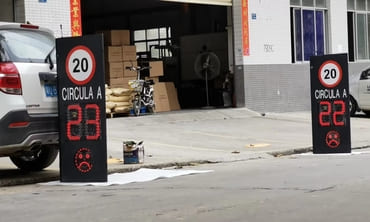
Q11: Can the sign display custom messages like "SLOW DOWN"? A11: Yes, our advanced "Matrix" series allows for both speed display and text-based warnings or emojis (like a sad face for speeders and a smiley face for compliant drivers).
Q12: How does the "Stealth Mode" benefit a city? A12: It allows the city to collect "unbiased" traffic data. When drivers see their speed, they slow down. Stealth mode lets you see how fast they really drive, which is essential for accurate traffic engineering studies.
Q13: Is the battery safe from fire or explosion? A13: We use LiFePO4 chemistry, which is the safest lithium technology available. It is chemically stable and does not suffer from "thermal runaway" like the batteries found in older electronics.
Q14: What is the maintenance requirement? A14: Minimal. We recommend cleaning the solar panel once or twice a year if the area is extremely dusty. The electronics are self-diagnostic and will report any issues via the IoT system.
Q15: Can the sign be powered by AC if solar is not an option? A15: Yes. RUICHEN offers "Hybrid" or "AC-Only" versions for locations with permanent shade (like deep tunnels or under heavy forest canopy).
To understand why the RUICHEN Radar Speed Sign Series is the industry benchmark, one must look at the underlying physics of Doppler detection and signal processing.
In 2026, most professional traffic signs utilize K-band (24.150 GHz) radar. This frequency offers the ideal balance between detection range and antenna size. RUICHEN’s K-band modules are engineered with a narrow beam-width, typically around 12 degrees. This narrow focus is what allows the sign to target a specific lane of traffic while ignoring vehicles in the adjacent lane or oncoming traffic—a critical feature for multi-lane arterial roads.
The environment at the roadside is "noisy" in a radar sense. Moving trees, heavy rain, and even the vibration of the sign pole itself can create interference. RUICHEN's 2026 firmware uses Fast Fourier Transform (FFT) algorithms to analyze the returning radar signal. By breaking the signal into its frequency components, the system can distinguish between the "harmonic signature" of a vehicle and the random noise of a storm. This is why RUICHEN signs maintain accuracy in conditions where budget signs fail.
Radar modules are traditionally energy-intensive components. In a solar-powered system, this is a major engineering challenge.
Instead of emitting a continuous wave (CW), RUICHEN’s 2026 radar modules use a Pulsed-Doppler approach. The radar "pings" the road at high frequencies (milliseconds apart). This reduced duty cycle allows the radar to provide real-time tracking while consuming up to 60% less energy than older continuous-wave systems.
For remote deployments with limited winter sun, RUICHEN signs can be configured with "Intelligent Wake-Up." The radar operates in a ultra-low power state until a large moving object is detected. Only then does the high-intensity LED display activate. This ensures that the system's energy is only used when a driver is present to see the feedback, effectively extending the sign's autonomy indefinitely in many climates.
A radar sign is a long-term infrastructure investment. Its structural engineering must match its electronic sophistication.
Electronic components, particularly the radar transceiver and the LED drivers, generate heat. In the 50°C+ environments of the Middle East or the intense sun of the Southern US, this heat can lead to component failure. * Integrated Heat Sinking: The RUICHEN polished aluminum shell is not just a box; it is a heat sink. The internal components are thermally bonded to the aluminum chassis, which dissipates heat into the surrounding air. This "passive cooling" eliminates the need for fans, which are a common point of mechanical failure in cheaper signs.
Major highways are subject to constant micro-vibrations from heavy freight traffic. Over time, these vibrations can crack solder joints and loosen connectors. RUICHEN's 2026 internal architecture is "ruggedized." All internal boards are mounted with vibration-damped standoffs, and connectors are secured with high-grade industrial adhesives. This ensures the sign remains operational even on the busiest logistics corridors.
Why do radar speed signs work so well? It's based on the psychological concept of a Feedback Loop.
Drivers often speed because they have lost their sense of "relative velocity" inside a modern, quiet vehicle. The radar sign provides an external stimulus that forces the driver into the OODA Loop (Observe, Orient, Decide, Act). 1. Observe: The driver sees the bright LED display. 2. Orient: They realize the number on the screen is their speed. 3. Decide: They compare this to the posted limit. 4. Act: They apply the brakes. RUICHEN's use of high-contrast LEDs and color-coded feedback (Red/Yellow/Green) is specifically designed to accelerate this mental process, leading to faster and more consistent speed reductions.
In 2026, we solve sign fatigue by making the sign Dynamic. A static sign is eventually ignored by daily commuters. A RUICHEN sign that only flashes when you are speeding—or changes its message based on your behavior—remains a "novel" stimulus that the brain cannot easily tune out.
In the high-density environment of Singapore, RUICHEN signs are integrated with the city's IoT network. The signs collect anonymous traffic data that is used to optimize signal timing during peak hours, while simultaneously reducing speeding in school zones by 25%.
Deploying electronics in the Saudi desert is a ultimate test of durability. RUICHEN's 2026 radar signs, equipped with thermal-protected LiFePO4 batteries and sand-resistant IP66 housings, have maintained 100% uptime in temperatures exceeding 52°C, supporting the safety goals of the Kingdom's 2030 Vision infrastructure projects.
In the flood-prone regions of the Philippines, RUICHEN's IP67-sealed electronics have survived multiple storm seasons. Even during weeks of heavy cloud cover, our AI-driven energy management ensures that critical hazardous curve warnings remain active for every driver.
The road safety decisions made in 2026 will define the safety and efficiency of our transportation networks for the next decade. The 2026 Solar Radar Speed Sign Buying Guide highlights a clear path: prioritize precision, demand structural durability, and embrace the data-driven future of smart cities.
Investing in the RUICHEN Radar Speed Sign Series is not just a procurement choice; it is a commitment to "Vision Zero." By solving the historical pain points of radar accuracy and energy resilience, RUICHEN provides the technical foundation upon which safer communities are built.
Q1: How accurate is the radar in heavy rain? A1: RUICHEN’s 2026 radar modules utilize digital signal processing (DSP) to filter out the "clutter" caused by rain or snow. While extreme weather can slightly reduce the detection range, the accuracy of the speed measurement remains within +/- 1 km/h for vehicles within the detection zone.
Q2: Can it detect multiple vehicles at once? A2: Yes. The radar tracks multiple targets simultaneously. However, to prevent driver confusion, the display logic is programmed to show the "most relevant" target—typically the fastest vehicle or the one closest to the sign.
Q3: What is the lifespan of the solar panel? A3: The high-efficiency monocrystalline panels are rated for a 20-25 year service life. They are protected by 4mm tempered glass that is resistant to hail and heavy wind loads.
Q4: How to prevent vandalism of the LED display? A4: The display is protected by a 5mm high-impact polycarbonate lens with an IK10 rating. This material is virtually unbreakable and is treated with an anti-graffiti coating that allows for easy cleaning of paint or markers.
Q5: Is the battery safe from fire or explosion? A5: Yes. We use LiFePO4 (Lithium Iron Phosphate) chemistry, which is the safest lithium battery technology. It is chemically stable and does not suffer from "thermal runaway," making it safe for deployment in high-heat environments.
Q6: How does the sign handle "Sign Fatigue"? A6: By using radar-activated flashing and multi-color feedback, the sign only engages when a driver is present or speeding. This dynamic response prevents the sign from becoming "background noise" to regular commuters.
Q7: Can the data be integrated into my city's existing traffic management software? A7: Yes. Our IoT-enabled signs support standard data formats (JSON/MQTT) and can be integrated into most third-party Intelligent Transportation Systems (ITS) via our API.
Q8: What happens if the solar panel is covered in snow? A8: Our mounting brackets allow for a steep tilt angle (up to 60 degrees) in high-latitude regions, which encourages snow to slide off. Additionally, the battery's 15-day autonomy ensures the sign continues to function until the snow can be cleared or melts.
Q9: Does the radar detect cyclists? A9: Yes. Our high-sensitivity K-band radar can be tuned to detect smaller targets like cyclists and motorcyclists, making it an ideal tool for shared-use paths and urban cycling corridors.
Q10: Is there a monthly fee for the cloud data service? A10: RUICHEN offers a tiered service model. Basic health monitoring is often included for the first 3-5 years, while advanced real-time traffic analytics and cloud storage may require a modest annual subscription.
Q11: Can the sign display different speed limits based on the time of day? A11: Yes. The system features a programmable internal clock and calendar. You can set lower speed limits for school hours or different thresholds for nighttime vs. daytime.
Q12: How do you handle the "Ghost Targets" created by metallic fences? A12: Our 2026 firmware includes "Stationary Target Suppression." The radar identifies objects that have zero velocity and filters them out of the processing loop, ensuring only moving vehicles are tracked.
Q13: What is the visual distance of the LEDs in direct desert sunlight? A13: Thanks to our ultra-bright LED beads and high-contrast black masking, the display remains clearly legible from over 800 meters away, even under the intense mid-day sun of the Middle East.
Q14: How difficult is it to replace the battery in the future? A14: The RUICHEN series features a modular "Slide-Out" battery compartment. A single technician can replace the battery in under 10 minutes without needing to take the entire sign down from the pole.
Q15: Does the sign comply with the MUTCD 11th Edition? A15: Yes. All RUICHEN Radar Speed Signs are engineered to meet the latest federal and international standards for font height, color, and operational logic.
.png)
.jpg)
.jpg)